strong cooling and compatible motherboards, with the 9950X3D demanding more power and better thermal management.
Under the Hood: Architectural Differences
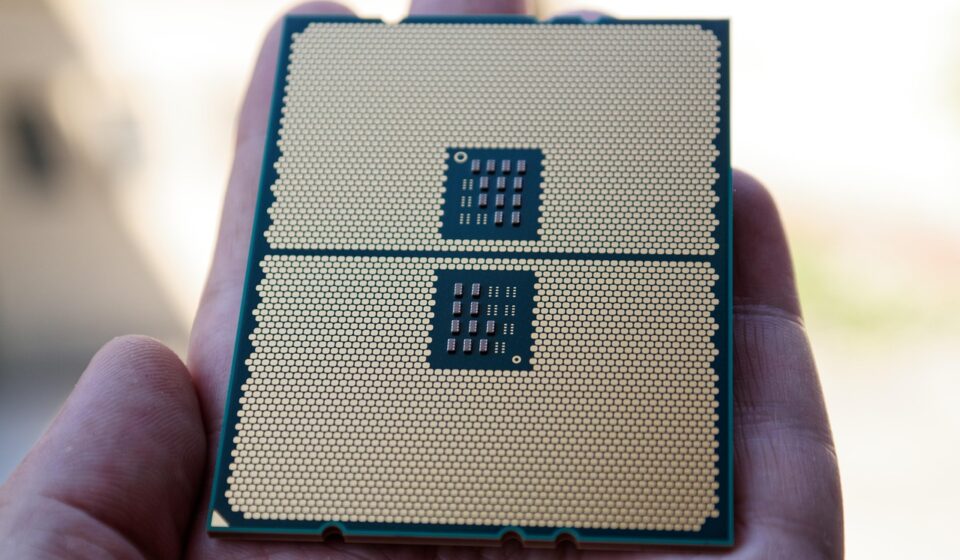
At the core of this comparison lie fundamental architectural differences. The Ry zen 7 9800X3D features a single Core Complex Die (CCD), packing 8 cores and 32MB of L3 cache, with an additional 64MB of 3D V-Cache stacked on top, bringing the total L3 cache to a massive 96MB. This design is highly optimized for gaming, as it consolidates all cores onto a single cache stack, minimizing latency.
In contrast, the Ry zen 9 9950X3D is a dual-CCD monster. It boasts 16 cores spread across two CCDs, with one CCD featuring the 3D V-Cache (32MB L3 + 64MB 3D V-Cache = 96MB total) and the other CCD operating with standard cache (32MB L3). This hybrid approach allows for a staggering 16 cores while retaining significant gaming benefits from the V-Cache on one of the CCDs. Software and drivers are crucial here to intelligently assign tasks to the appropriate CCD.
Gaming Performance Showdown: 9800X3D vs 9950X3D
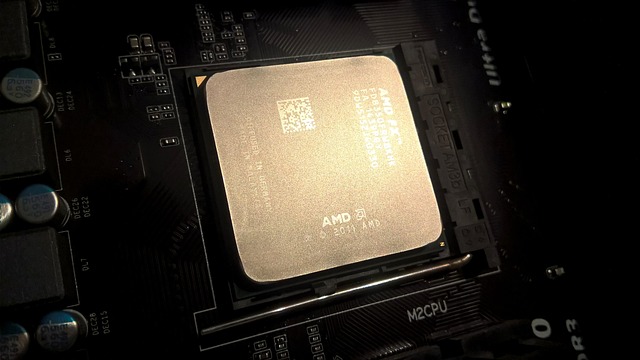
When it comes to raw gaming frame rates, the Ry zen 7 9800X3D often takes the crown, especially in CPU-bound scenarios. Its single-CCD design means all 8 cores have access to the full 96MB of L3 cache with minimal latency. This is particularly beneficial in games that are sensitive to cache performance, which is a growing trend in modern titles seeking higher resolutions and smoother frame delivery.
The Ry zen 9 9950X3D, while featuring 16 cores, can sometimes trail the 9800X3D in pure gaming benchmarks. This is because the gaming workload might only be directed to the V-Cache-enabled CCD, effectively utilizing 8 cores. While it’s still an incredibly powerful gaming CPU, the overhead associated with managing two CCDs and the potential for less optimal core assignment can lead to slightly lower average or minimum FPS in certain games. According to benchmarks from TechSpot as of early 2026, the 9800X3D showed a consistent lead of around 5-10% in gaming performance across a suite of demanding titles compared to the 9950X3D in CPU-limited scenarios.
Productivity Powerhouse: The Ry zen 9 9950X3D Advantage
This is where the Ry zen 9 9950X3D truly shines. With its 16 cores and 32 threads, it offers substantially more raw processing power for multi-threaded applications. Tasks like video editing, 3D rendering, complex scientific simulations, compiling large codebases, and running multiple virtual machines benefit immensely from the increased core count.
For content creators, engineers, and power users, the 9950X3D provides a significant uplift in rendering times and multitasking capabilities. While the 9800X3D’s 8 cores are competent, they simply can’t compete with the sheer throughput of the 9950X3D in heavily parallelized workloads. For example, a 4K video export that might take 10 minutes on the 9800X3D could potentially be completed in under 7 minutes on the 9950X3D, representing a substantial time saving for professionals.

Understanding 3D V-Cache Technology
AMD’s 3D V-Cache technology is a major shift, and it’s the secret sauce behind the exceptional gaming performance of both these CPUs. It involves stacking an additional layer of L3 cache directly on top of the existing cache on the CPU die. This significantly increases the total L3 cache size (from 32MB per CCD to 96MB per CCD in these Ry zen 9000 models), which can drastically reduce the need for the CPU to access slower main system RAM.
For gaming, larger and faster cache means the CPU can keep more game data readily accessible, leading to smoother frame rates, fewer stutters, and improved performance in cache-sensitive titles. The key innovation with the 9950X3D is how AMD implemented this across its dual-CCD design, ensuring that at least one CCD gets the full cache benefit, while still using the core count of the second CCD for productivity. According to AMD’s technical documentation released in late 2025, the 3D V-Cache process allows for 12 times the cache density compared to traditional 2D stacking methods.
Power Consumption and Thermals
While both CPUs are built on efficient Zen 4 architecture, their power demands differ. The Ry zen 7 9800X3D, with its 8-core single-CCD design, has a Thermal Design Power (TDP) of 120W. This makes it relatively easier to cool, often performing exceptionally well with high-end air coolers or mainstream AIO liquid coolers.
The Ry zen 9 9950X3D, on the other hand, is a much more power-hungry chip with a TDP of 170W. Its 16 cores and dual-CCD configuration naturally draw more power, especially under heavy multi-threaded loads. This means that for optimal performance and thermal management, a strong cooling solution is almost mandatory. We’re talking high-performance 360mm AIO liquid coolers or custom water-cooling loops to keep the CPU temperatures in check and prevent thermal throttling, ensuring consistent performance during extended productivity sessions. Noctua’s pumpless liquid cooler prototype, as reported by PC Gamer in June 2026, shows promise for future cooling advancements, but current high-end AIOs remain the standard for such powerful CPUs.
Platform Considerations: Motherboards and RAM
Both the Ry zen 7 9800X3D and the Ry zen 9 9950X3D use AMD’s AM5 socket, meaning they are compatible with motherboards featuring the X670E, X670, B650E, and B650 chipsets. However, the choice of motherboard can still impact performance and stability, especially for the more demanding 9950X3D.
For the 9950X3D, it’s highly recommended to opt for a high-end X670E or X670 motherboard with strong VRM (Voltage Regulator Module) heatsinks and power delivery to handle the sustained power draw. While the 9800X3D is less demanding, a quality B650 or B650E board is usually sufficient for optimal gaming performance. Both CPUs support DDR5 RAM, and while speeds vary, AMD’s official guidance as of 2026 suggests that DDR5-6000 with low timings (e.g., CL30) offers the sweet spot for performance and stability with Ry zen 9000 series CPUs, thanks to the Infinity Fabric clock speed synchronization.
Cost and Value Proposition in 2026
As of June 2026, pricing is a significant factor. The Ry zen 7 9800X3D typically retails for a lower price point, often slotting in as a premium gaming CPU without reaching the absolute peak of high-end pricing. Its value proposition is strong for gamers who want top-tier performance without breaking the bank.
The Ry zen 9 9950X3D, being the flagship with more cores and a more complex design, comes with a considerably higher price tag. Its value is primarily for professionals and power users whose work directly benefits from its multi-threaded capabilities. The total cost of ownership also needs to factor in the more substantial cooling solution and potentially a more strong motherboard required for the 9950X3D, increasing its overall system build cost compared to the 9800X3D.
Real-World Scenarios: Who Needs Which CPU?
Imagine Sarah, a freelance graphic designer and avid gamer. Her workflow involves designing marketing materials, editing occasional client videos, and playing the latest AAA titles like Cyberpunk 2077 and Starfield. For Sarah, the 9800X3D would offer excellent gaming performance, making her gaming sessions smooth and immersive. Its 8 cores would handle her graphic design tasks adequately, but video editing might feel a bit sluggish.
Now consider Mark, a 3D animator and simulation engineer. Mark spends his days rendering complex scenes, running fluid dynamics simulations, and occasionally streaming his work. For Mark, the 16 cores and 32 threads of the 9950X3D are essential. The time saved in rendering and simulation processing directly translates to increased productivity and faster project completion, making the higher cost a justifiable business expense. While he enjoys gaming, the productivity gains are paramount.
Common Mistakes to Avoid
One common mistake is assuming more cores always means better gaming. While the 9950X3D has more cores, the 9800X3D’s unified cache architecture often makes it the gaming champion. Don’t overspend on the 9950X3D if your primary use case is gaming.
Another pitfall is underestimating the cooling requirements for the 9950X3D. Pairing it with an entry-level air cooler will lead to thermal throttling, severely limiting its performance and essentially negating the advantage of its core count. Ensure your cooling solution is commensurate with the CPU’s power draw. Finally, ensure your motherboard BIOS is updated to the latest version to properly support and manage the dual-CCD functionality of the 9950X3D.
Expert Insights and Tips for 2026
For users building a new system in 2026, the decision often hinges on budget and primary use. If gaming is your absolute priority and you have a reasonable budget, the 9800X3D is arguably the best value proposition for top-tier gaming performance. It offers a fantastic experience without the hefty price tag or cooling demands of the 9950X3D.
However, if you’re a professional creator, a researcher, or someone who frequently juggles demanding applications alongside gaming, the 9950X3D is the undisputed champion. The productivity gains are substantial and can justify the higher cost for individuals or businesses where time is money. As reported by sources like Tom’s Hardware and Gamers Nexus in early 2026, the efficiency of the 9800X3D in gaming at its price point makes it a standout choice for many.
Consider your specific software. Some applications are incredibly well-optimized for high core counts (e.g., Blender, Adobe Premiere Pro), while others are more sensitive to clock speed and cache performance (many esports titles, older games). Always check benchmarks for the software you use most frequently. For specific comparisons on productivity benchmarks, exploring resources like Puget Systems’ detailed analyses is highly recommended.
Frequently Asked Questions
Will the Ry zen 9 9950X3D be significantly better than the 9800X3D for gaming in 2026?
Generally, no. While the 9950X3D is a powerful gaming CPU, the 9800X3D’s unified 3D V-Cache design on a single CCD often gives it an edge in pure gaming performance due to lower latency.
Is the 9950X3D overkill for most gamers?
Yes, for most gamers whose primary focus is playing games, the 16 cores and higher cost of the 9950X3D are overkill. The 9800X3D provides superior gaming value and performance for the majority.
Can I use the same motherboard for both CPUs?
Yes, both CPUs use the AM5 socket and are compatible with X670E, X670, B650E, and B650 motherboards. Ensure the motherboard has a capable VRM for the 9950X3D and an updated BIOS.
Which CPU is better for streaming and gaming simultaneously?
The 9950X3D, with its 16 cores, is better suited for simultaneous high-quality streaming and gaming due to its superior multi-threaded performance, offloading encoding tasks more effectively.
What are the typical prices for these CPUs in mid-2026?
As of June 2026, the Ry zen 7 9800X3D typically retails around $450-$500 USD, while the Ryzen 9 9950X3D is priced higher, often in the $650-$750 USD range, depending on retailer and availability.
Does 3D V-Cache make a difference in productivity tasks?
While 3D V-Cache primarily benefits gaming, it can offer marginal improvements in some specific productivity tasks that are sensitive to cache size and latency. However, the core count is the dominant factor for most professional workloads.
Information current as of June 2026; pricing and product details may change.
Source: Britannica
Editorial Note: This article was researched and written by the Tibbs Forge editorial team. We fact-check our content and update it regularly. For questions or corrections, contact us. Knowing how to address 9800x3d vs 9950x3d early makes the rest of your plan easier to keep on track.
Related read: Ccmexec Exe: What It Is and How to Manage It
Related read: Gearview Exe: Understanding and Resolving Issues.