The Dreadtober 2016 Pledge was a community challenge that encouraged Warhammer 40,000 hobbyists to publicly commit to finishing at least one Dreadnought-class model during October. Held just before the late-year holiday season, the four-week initiative provided a dedicated timeframe to break through project inertia and share progress across blogs, forums, and social media.
The challenge maintained an open-door policy for Space Marine, Chaos, and Xenos factions, guiding participants through structured weekly milestones from assembly to final detailing. The rest of this article details how the community pledge worked, provides a four-week step-by-step execution plan, and reviews popular Dreadnought conversion ideas from the 2016 event.
The Spirit of Dreadtober 2016: A Pledge to the Hobby
The Warhammer 40,000 hobby is a vast and often solitary pursuit, filled with epic conversions, meticulous painting, and the occasional existential crisis over a misplaced detail. Yet, community events have always been the lifeblood that keeps the hobby vibrant and engaging. Among these, the Dreadtober challenge has carved out a special niche, and its 2016 iteration remains a fond memory for many. The Dreadtober 2016 Pledge wasn’t just about painting a single model; it was a commitment to pushing personal hobby boundaries, sharing progress, and fostering a sense of camaraderie. As of May 2026, the echoes of that challenge still resonate, offering valuable lessons for today’s gamers and painters looking to reignite their passion.
- The Dreadtober 2016 Pledge encouraged hobbyists to complete at least one Dreadnought-class model.
- It fostered a sense of community and shared progress through online platforms.
- Participants often shared their painting techniques and conversion ideas, enriching the collective hobby knowledge.
- The challenge provided motivation to tackle larger or more complex projects that might otherwise be left unfinished.
- Lessons learned from Dreadtober 2016 are still relevant for hobbyists seeking structure and inspiration in 2026.
Holding a community challenge in October served a deliberate tactical purpose in the annual hobby calendar. Falling right before the busy late-year holiday season and winter gaming leagues, October provided a dedicated four-week window where hobbyists could concentrate on a single substantial center-piece model. By converting passive enthusiasm into a public pledge, participants broke through the psychological inertia that often stalls large-scale projects, establishing a template for structured painting that remains widely used today.
Defining the Dreadtober 2016 Pledge
At its core, Dreadtober is a yearly hobby challenge typically held in October, encouraging participants to dedicate their efforts to painting a Dreadnought or similar large, imposing Warhammer 40,000 model. The 2016 iteration was particularly memorable, building on earlier iterations and solidifying its place in the hobby calendar. The “pledge” aspect was crucial; it was a public declaration of intent, shared across forums, blogs, and social media. This wasn’t a formal competition with strict rules, but rather a self-imposed challenge designed to overcome procrastination and the common pitfall of starting ambitious projects only to have them languish unfinished.
The primary goal was simple: commit to finishing at least one Dreadnought-class model during October. This could be a standard Games Workshop Dreadnought kit, a Forge World variant, or even a heavily converted model serving the same thematic purpose, such as a Helbrute or a custom Knight. The emphasis was on completion, not necessarily on achieving a Golden Daemon-level paint standard, making it accessible to hobbyists of all skill levels. This accessibility was key to its widespread appeal, encouraging participation from seasoned veterans and relative newcomers alike.
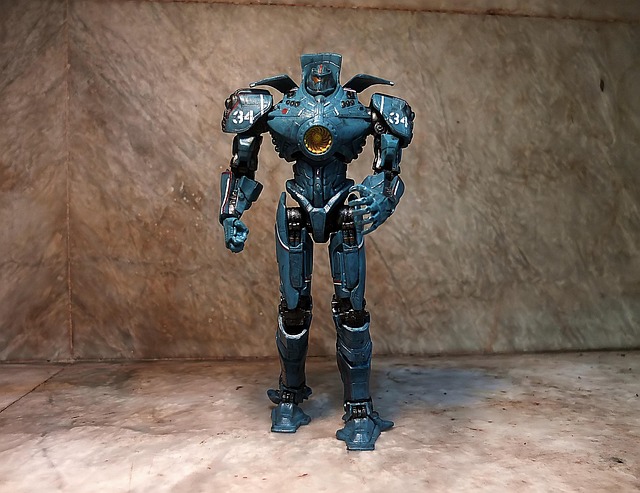
While Space Marine Dreadnoughts—such as the classic Boxnought (Castraferrum pattern), Heresy-era Contemptors, and bulky Deredeo variants—formed the backbone of the challenge, the definition of “Dreadnought-class” was intentionally broad. Xenos and Chaos players participated with equivalent war engines. Chaos Space Marine players submitted mutated Helbrutes or Forge World Decimators; Ork warbosses assembled crude Deff Dreads and Killa Kans; Craftworld Aeldari painters focused on elegant Wraithlords; and Tau Empire enthusiasts pledged Crisis Battlesuits or Ghostkeels. This open-door policy ensured that no faction was excluded, maximizing community involvement.
How It Worked: The Power of Shared Progress
The success of the Dreadtober 2016 Pledge, and indeed all Dreadtober events, lies in its community-driven nature. Participants would typically announce their pledge, often detailing the specific model they intended to build and paint. Throughout October, they would then share their progress, whether through blog posts, forum updates, or social media using specific hashtags. This constant stream of work-in-progress (WIP) photos and updates served multiple purposes.
Firstly, it provided accountability. Knowing that others were following your progress made it harder to abandon the project. Secondly, it fostered a supportive environment. Fellow participants would offer advice, encouragement, and constructive criticism. Seeing others overcome painting challenges or solve tricky conversion problems could be incredibly motivating. This shared journey transformed what could be a solitary grind into a collective adventure, amplifying the sense of accomplishment when the final model was completed.
The informal nature of the pledge meant that participants could adapt it to their own circumstances. Some might tackle a brand-new kit fresh out of the box, while others might use it as an opportunity to finally finish a long-neglected project lurking in their hobby backlog. According to hobbyist discussions from that era, the shared enthusiasm often inspired participants to take on projects they might have otherwise deemed too daunting, such as complex weathering effects or intricate freehand designs on the Dreadnought’s armour plates.
To keep participants on track without imposing rigid rules, the event structured the 31 days of October into four unofficial weekly milestones:
- Week 1 (October 1–7): Target Declaration & Assembly: Finalizing model choice, cleaning mold lines, magnetizing weapon options, sub-assembly planning, and posting initial unbuilt/assembled WIP shots.
- Week 2 (October 8–14): Priming & Primary Colors: Applying base coats, establishing light sources through zenithal shading, and blocking out major armor panels.
- Week 3 (October 15–21): Secondary Colors & Shading: Painting metallics, joint seals, weapon housings, applying pin-washes, and adding preliminary edge highlights.
- Week 4 (October 22–31): Detailing, Weathering & Basing: Executing freehand heraldry, applying battle damage or pigment powders, finishing the base, applying top-coat varnish, and publishing final showcase photos.
Worked Example: A Step-by-Step 4-Week Execution Plan
To understand how a Dreadtober pledge translates into action, consider this concrete example of an Imperial Fists Contemptor Dreadnought completed across a single October schedule:
Week 1: Sub-Assembly and Magnetization
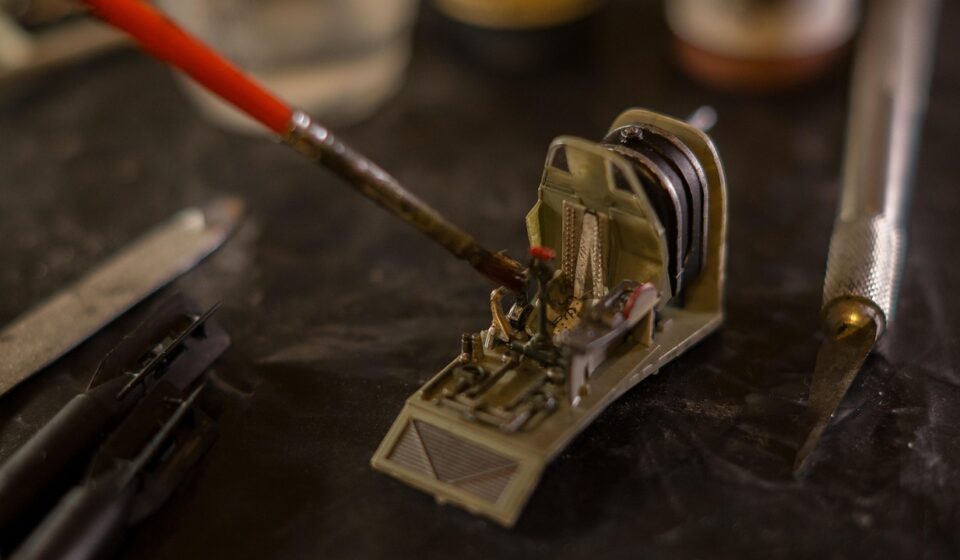
The painter cleans all plastic sprue gates and resin flash. To prepare for modular weapon swaps, small 3mm x 1mm neodymium magnets are drilled into the shoulder sockets and arm joints. The torso, legs, head, and arms are left unattached to ensure easy access to internal torso details. Total time spent: 4 hours.
Week 2: Basecoating Large Armour Panels
Yellow can be notoriously difficult to paint smoothly over dark surfaces. The painter primes the entire model with a dark brown spray, followed by a zenithal overspray of white. Using a wet palette, several thin layers of yellow acrylic are brushed onto the outer armor plates, maintaining smooth coverage without clogging recessed panel lines. Total time spent: 5 hours.
Week 3: Recess Shading and Edge Highlighting
Instead of washing the entire model—which would leave tide marks on large, flat armor surfaces—the painter applies a targeted recess wash of dark brown oil paint thinned with mineral spirits directly into panel gaps. Once dry, sharp edge highlights of pale yellow and white are applied along every upper ridge of the armor plating. Total time spent: 6 hours.
Week 4: Battle Damage, Basing, and Final Polish
A small foam sponge dipped in dark brown acrylic is dabbed lightly along lower leg panels to simulate battle wear. Fine silver dots are added inside the brown marks to represent fresh bullet strikes exposing bare adamantium. The base is textured with acrylic mud paste, tufts of dead grass, and a painted battlefield helmet. A matte varnish seals the miniature before the final photo shoot on October 30th. Total time spent: 4 hours.
Dreadnought Conversion Ideas from 2016
The Dreadtober 2016 Pledge wasn’t just about painting; it was a fertile ground for creative conversions. Participants used the challenge to transform standard kits into unique masterpieces. Common themes included:
- Chapter-Specific Flair: Many hobbyists customized their Dreadnoughts to represent their favourite Space Marine chapters, adding unique heraldry, colour schemes, and even chapter-specific weapon loadouts. For example, a Blood Angels enthusiast might add iconic angelic motifs, while an Iron Hands painter would focus on mechanical augmentations.
- Heavy Weapon Platforms: Some players converted their Dreadnoughts to represent unique heavy support roles, integrating larger guns, extra armour plating, or specialized sensor equipment. This often involved kitbashing with other heavy vehicle kits or even elements from Imperial Knight kits.
- Heresy-Era Conversions: A significant number of participants opted for conversions reflecting the Horus Heresy era, using older model designs or adding elements to represent the iconic figures of that tumultuous period. This could involve specific legion iconography or battle damage that tells a story of ancient wars.
- Unique Lore Interpretations: Beyond official lore, some hobbyists created entirely unique Dreadnought concepts, perhaps representing a lost chapter, a custom character, or even a more monstrous, corrupted interpretation of the venerable war machine.
These conversions often sparked discussions about modelling techniques, the best way to attach disparate parts, and how to ensure a visually cohesive final product. The shared ingenuity demonstrated during Dreadtober 2016 continues to inspire new conversion ideas for contemporary hobbyists. For instance, the integration of 3D-printed upgrade parts, a growing trend as of 2026, can be seen as a modern evolution of the creative kitbashing seen in 2016.
Comparing Pledge Approaches: Box-Build vs. Heavy Kitbash vs. Heresy-Era Resin
Choosing the right build style was one of the most critical decisions for Dreadtober 2016 participants. Each approach presented distinct advantages, time commitments, and technical hurdles during a 31-day challenge window.
| Pledge Approach | Typical Assembly Time | Painting Complexity | Key Risk Factor | Best Suited For |
|---|---|---|---|---|
| Standard Plastic Kit (Box-Build) | 2–4 hours | Moderate | Rushing through basic armor panel highlights | Beginners & painters under tight schedule constraints |
| Heavy Kitbash / Conversion | 8–15 hours | High | Spending too much time converting, leaving insufficient time to paint | Experienced modelers seeking unique army centerpieces |
| Resin Cast / Heresy Variant | 5–8 hours | Moderate to High | Brittle resin, warping, and complex multi-part washing prep | Veterans comfortable with superglue, pinning, and hazardous dust cleanup |
Common Dreadnought Painting Challenges and Practical Fixes
Painting large, mechanical centerpieces introduces technical problems that rarely appear when painting standard infantry. Here are four common issues encountered during Dreadnought pledges and their practical solutions:
1. Chalky or Streaky Finish on Large Armour Panels
Cause: Applying thick paint directly from the pot or brushing paint onto large flat surfaces after it has already begun to dry on the brush.
Fix: Thin acrylic paint with water or acrylic medium to a milk-like consistency. Apply multiple thin coats, allowing each to dry completely. Alternatively, use a wet palette to maintain consistent moisture, or use stippling techniques with a broad makeup brush to build smooth gradients.
2. Structural Instability or Heavy Top-Weight
Cause: Posable joints (hip, knee, and torso connections) secured only with plastic cement or superglue, leading to snapping during transport or painting.
Fix: Reinforce every major structural joint with metal pins. Drill 1mm holes into joint sockets with a hand pin vise, insert cut pieces of brass wire or paperclips, and bond with cyanoacrylate (superglue) alongside plastic cement.
3. Paint Rubbing Off Mechanical Joints During Handling
Cause: Manipulating arm sockets, waist swivels, or weapon mounts while painting.
Fix: Paint the model in sub-assemblies. Mount torsos, arms, and legs onto individual corks or wooden dowels using poster tack or temporary pinning wires. Apply a coat of satin or matte varnish over finished components before final assembly.
4. Mid-Month Burnout from Tedious Edge Highlighting
Cause: Exhaustion from trying to draw crisp highlight lines around dozens of square armor plates during Week 3.
Fix: Shift to volumetric highlighting or oil washes. Instead of manual edge lines on every angle, use zenithal spray priming, drybrushing with soft makeup brushes, or targeted enamel panel-liners to create high contrast with far less manual line work.
Who a Dreadtober-Style Challenge Does Not Suit
While structured community pledges offer strong benefits, they are not universally suitable for every hobbyist or painting style:
- Mass Army Speed Painters: If your immediate goal is completing 100 infantry units for an upcoming tournament, sinking 20 hours into a single detailed centerpiece model will stall army progression.
- Hobbyists with Highly Unpredictable Schedules: A strict 31-day window creates negative stress if work or personal commitments prevent regular painting sessions, leading to frustration rather than enjoyment.
- Perfectionist Display Painters: Master-class painters who spend 80+ hours on single miniatures utilizing complex non-metallic metal (NMM) or smooth glazing will find a one-month deadline artificially restrictive.
- Absolute Beginners Lacking Basic Tools: Newcomers who do not yet possess hobby knives, plastic glue, sprue clippers, primers, or basic paints will find tackling a large, multi-component dreadnought overwhelming without foundational experience on smaller models.
Lessons Learned: What Dreadtober 2016 Taught Us
Looking back at the Dreadtober 2016 Pledge, several key lessons emerge that remain highly relevant for the hobby community as of May 2026. The most significant takeaway is the power of setting a clear, achievable goal. Committing to a specific model type, like a Dreadnought, provides a tangible target that simplifies planning and decision-making. This focus prevents the common hobbyist pitfall of getting sidetracked by new releases or side projects before completing the primary one.
Another crucial lesson is the value of incremental progress. Many participants found success not by attempting to paint the entire model in one go, but by breaking it down into smaller, manageable steps. This could involve dedicating a specific hour each week to assembly, another to priming, and then breaking down the painting process by component or colour scheme. This methodical approach prevents burnout and makes the overall project feel less overwhelming. As of 2026, many hobbyists still find this phased approach essential for tackling their extensive backlog.
The community aspect, as highlighted by participants on platforms like Reddit and various gaming blogs, was instrumental. The shared experience of facing similar challenges—be it assembling a fiddly part, achieving smooth armour panels, or painting intricate details—created bonds and fostered a collective problem-solving mentality. This is a recurring theme in discussions about Warhammer 40k hobby challenges, emphasizing that shared goals amplify individual motivation.
Practical Tips for Your Own Pledge in 2026
While Dreadtober 2016 is in the past, the spirit of setting a hobby pledge is evergreen. If you’re inspired to undertake your own challenge, whether for Dreadtober 2026 or any other time of year, here are some practical tips:
- Choose Wisely: Select a model that genuinely excites you. A Dreadnought is iconic, but any large or complex model can serve as the focus of your pledge. Ensure it’s a model you’re motivated to finish.
- Be Realistic: Assess your available time and skill level. A simple, well-executed model is far more satisfying than an overly ambitious project that ends up incomplete. It’s better to finish one model than to start five.
- Break It Down: Plan your project in phases. Assembly, priming, base coats, washes, highlights, and details. Tackling each phase sequentially makes the task manageable.
- Set Milestones: Beyond the final completion date, set smaller intermediate goals, such as finishing assembly by the first week or completing all base coats by the end of the second week.
- Document Your Progress: Take photos or write short updates as you go. This serves as accountability and creates a visual record of your achievement. Sharing these can also garner support and feedback from the community.
- Don’t Fear Mistakes: Every hobbyist makes mistakes. The key is learning from them and finding solutions. The community is often a great resource for troubleshooting.
- Embrace the Process: Remember that the goal is not just the finished model, but the journey of creation. Enjoy the process, learn new techniques, and celebrate your progress.
Following these steps can help ensure your own hobby pledge is a rewarding experience, much like those undertaken during the memorable Dreadtober 2016 event. For instance, when approaching complex models as of 2026, many hobbyists find success by utilizing modular painting techniques, which allow for easier access to hard-to-reach areas.
The Enduring Legacy of Dreadtober
The Dreadtober 2016 Pledge was more than just a temporary hobby event; it was a testament to the enduring appeal of focused challenges and community engagement within the Warhammer 40,000 hobby. It demonstrated that by setting a clear objective and sharing the journey, hobbyists can overcome inertia and achieve their goals. The camaraderie fostered during these events provides motivation and inspiration that extends far beyond the challenge itself.
As we look ahead to future hobby events in 2026 and beyond, the principles established by challenges like Dreadtober 2016 remain vital. They encourage us to pick up our brushes, tackle those daunting projects, and connect with fellow enthusiasts. Whether you participated in 2016 or are new to the idea, the concept of a focused hobby pledge is a powerful tool for growth and enjoyment within the miniature wargaming community. It’s a reminder that even the most imposing of models, like a mighty Dreadnought, can be conquered with dedication, community support, and a well-made pledge.
Frequently Asked Questions
What was the main objective of the Dreadtober 2016 Pledge?
The primary goal was to publicly commit to building, painting, and fully finishing at least one Dreadnought-class model during the month of October 2016, sharing weekly work-in-progress updates across blogs and social media to foster community accountability.
Were non-Space Marine models allowed in the Dreadtober 2016 challenge?
Yes. The definition of a Dreadnought-class model was intentionally broad. Participants routinely entered Chaos Helbrutes, Ork Deff Dreads, Craftworld Aeldari Wraithlords, Tau Battlesuits, and Necron walker engines.
How does a public pledge help overcome hobby procrastination?
A public pledge introduces external accountability and breaks a intimidating project into structured weekly milestones. Sharing progress pictures builds community encouragement, which combats burnout and prevents models from languishing in an unpainted backlog.
What is the recommended way to paint complex Dreadnought models on a time deadline?
Use sub-assemblies to keep arm weapons, torso, and legs separate during initial painting. Utilizing spray primers or airbrushes for zenithal shading and applying oil/enamel washes for panel lines significantly cuts down tedious brush time while producing high-contrast finishes.