

Mountain Standard Time (MST) is fixed strictly at seven hours behind Coordinated Universal Time (UTC-7), placing local clocks exactly two hours behind Eastern Standard Time. To find the exact clock time in MST, subtract seven hours from UTC or two hours from EST, making 12:00 PM UTC equal to 5:00 AM MST.
While most locations within the Mountain Time boundary observe MST during winter months and switch to Mountain Daylight Time (MDT, UTC-6) in summer, places like most of Arizona, Yukon, and Sonora, Mexico remain on UTC-7 year-round.
The rest of the article covers the primary differences between MST and MDT, geographical rules across North American states, provinces, and tribal reservations, and straightforward calculations for converting MST to other global time zones.
What Time Is It MST? Your Guide to Mountain Standard Time
Mountain Standard Time (MST) is fixed strictly at seven hours behind Coordinated Universal Time (UTC-7). To find the exact clock time in MST right now, subtract seven hours from UTC, or subtract two hours from Eastern Standard Time, making 12:00 PM UTC equal 5:00 AM MST.
Understanding Mountain Standard Time and its UTC offset
Mountain Standard Time is a standard time zone designation defined mathematically as UTC-7. Coordinated Universal Time (UTC) serves as the primary time standard by which the world regulates clocks and time. When a region observes MST, its local clock time remains exactly seven hours behind UTC baseline time throughout the day.
Determining local time in the Mountain region requires distinguishing between the standard time zone abbreviation and local clock adjustments. While “Mountain Time” is frequently used as a broad geographic label covering the central-western belt of North America, MST specifically designates standard time (UTC-7). When daylight saving time is active, participating regions shift away from MST to Mountain Daylight Time (MDT), which operates at UTC-6.
Because MST is a fixed offset of UTC-7, it never changes its baseline calculation. A location on permanent MST remains on UTC-7 every day of the year, regardless of whether neighboring states or provinces adjust their clocks for summer.

MST versus MDT: standard time versus daylight saving time
The primary source of confusion when checking MST time is the shift between standard time and daylight saving time. In North America, the Uniform Time Act and regional municipal laws govern when participating regions change their clocks. Daylight saving time begins on the second Sunday in March and ends on the first Sunday in November.
During the winter months—from early November to mid-March—most jurisdictions within the Mountain Time boundary observe MST (UTC-7). Clocks are aligned across major population centers such as Denver, Salt Lake City, Calgary, and Phoenix. Every morning and evening, local clocks in these areas show the exact same standard time.
However, when daylight saving time begins in March, participating regions move their clocks forward by one hour to MDT (UTC-6). During these spring, summer, and early autumn months, calling local time in Denver or Salt Lake City “MST” is technically incorrect; those cities operate on MDT. Meanwhile, areas that do not observe daylight saving time stay on MST (UTC-7) all year long.
Navigating MST across North American states and provinces
The geographical reach of Mountain Standard Time stretches from the Canadian Arctic down through the American Rocky Mountain region and into northern Mexico. However, local observance rules vary significantly across federal and provincial borders.

US states in the Mountain Time Zone
In the United States, six states sit fully within the Mountain Time Zone: Colorado, New Mexico, Utah, Wyoming, Montana, and Arizona. Five other states split their time zone coverage between Mountain Time and neighboring time zones:
- Idaho: The southern half of Idaho, including Boise and Idaho Falls, observes Mountain Time. The Idaho Panhandle north of the Salmon River operates on Pacific Time.
- Oregon: Malheur County along the eastern border observes Mountain Time, while the rest of Oregon observes Pacific Time.
- South Dakota: The western half of South Dakota, including Rapid City and the Black Hills, observes Mountain Time.
- North Dakota: Southwestern counties located west of the Missouri River observe Mountain Time.
- Nebraska: The Nebraska Panhandle and western counties observe Mountain Time, while eastern regions observe Central Time.
Among these states, Colorado, New Mexico, Utah, Wyoming, Montana, Idaho, Oregon, South Dakota, North Dakota, and Nebraska all observe daylight saving time. They use MST (UTC-7) in winter and switch to MDT (UTC-6) in summer. Arizona is the major exemption in the United States, keeping most of its land area on MST year-round.
Canadian provinces and territories
Canada maintains distinct standard time rules across its western territories and provinces:
- Alberta: Alberta observes Mountain Time throughout the province, including Calgary and Edmonton. Alberta moves to MDT (UTC-6) during summer and returns to MST (UTC-7) in winter.
- Northwest Territories: Follows standard Mountain Time rules, switching between MST and MDT aligned with federal daylight saving schedules.
- Nunavut: The Kitikmeot Region observes Mountain Time, shifting between MST and MDT, while eastern regions of Nunavut operate on Central or Eastern time.
- Yukon: Yukon permanently discontinued seasonal clock changes and remains fixed at UTC-7 year-round. This makes Yukon time functionally identical to MST throughout the entire calendar year.
- British Columbia: Most of British Columbia observes Pacific Time, but specific eastern border communities—such as Creston and portions of the Peace River Regional District—do not observe daylight saving time and remain on UTC-7 (MST equivalent) year-round.
- Saskatchewan: Officially situated in the Central Time Zone (UTC-6), Saskatchewan does not adjust clocks for daylight saving time. As a result, during North American summer months, Saskatchewan’s local time matches MDT, while in winter, its local time matches Central Standard Time (CST). The border town of Lloydminster explicitly opts to follow Alberta’s Mountain Time schedule instead.
Mexican regions in Mountain Time
In Mexico, the state of Sonora sits directly south of Arizona and shares Arizona’s policy of avoiding daylight saving time adjustments. Sonora remains on UTC-7 (MST) year-round to facilitate border management and economic coordination with Arizona. Other northern Mexican border zones adjust clocks in coordination with adjacent US states under Mexican federal time regulations.
The unique case of Arizona and tribal reservation time zones
Arizona provides the most prominent example of year-round MST observance in North America. Under provisions of the 1966 Uniform Time Act, states were granted authority to opt out of daylight saving time by state legislative action. In 1968, Arizona enacted state legislation to remain on standard time year-round, prioritizing cooler morning hours and avoiding extended evening summer sunlight that increases household cooling expenses.
Because most of Arizona stays on MST (UTC-7) continuously, its time relationship with surrounding states changes twice a year:
- Winter (November to March): Phoenix and Tucson share the exact same clock time as Denver, Salt Lake City, and Calgary (all on MST / UTC-7).
- Summer (March to November): Phoenix and Tucson match the clock time in Los Angeles and Seattle (Pacific Daylight Time / UTC-7), sitting one hour behind Denver and Salt Lake City (MDT / UTC-6).
A notable complication exists within Arizona’s geographical borders due to tribal sovereignty. The Navajo Nation, which spans across northeastern Arizona, northwestern New Mexico, and southeastern Utah, chooses to observe daylight saving time. Doing so maintains consistent official time across all tribal lands and municipal offices across state lines.
Inside the Navajo Nation lies the Hopi Reservation, an enclave completely surrounded by Navajo territory. The Hopi Tribe opts out of daylight saving time, aligning with the rest of Arizona on year-round MST. Driving across northern Arizona in July means crossing multiple time boundaries within a single hour’s drive. Checking local Arizona time requires verifying exact county and reservation boundaries.
How to calculate and convert MST to other time zones
Converting between MST and other global time zones is straightforward once you know each zone’s standard offset from UTC. MST is fixed at UTC-7. To convert MST to any other zone, compare the target zone’s UTC offset against UTC-7.
Use these established offset rules for basic standard time calculations:
- MST to Pacific Standard Time (PST, UTC-8): PST is one hour behind MST. Subtract 1 hour from MST. (Example: 10:00 AM MST is 9:00 AM PST).
- MST to Central Standard Time (CST, UTC-6): CST is one hour ahead of MST. Add 1 hour to MST. (Example: 10:00 AM MST is 11:00 AM CST).
- MST to Eastern Standard Time (EST, UTC-5): EST is two hours ahead of MST. Add 2 hours to MST. (Example: 10:00 AM MST is 12:00 PM EST).
- MST to Universal Coordinated Time (UTC / GMT): UTC is seven hours ahead of MST. Add 7 hours to MST. (Example: 10:00 AM MST is 5:00 PM UTC).
When target locations participate in daylight saving time, adjust the target offset accordingly. For instance, converting MST (UTC-7) to Eastern Daylight Time (EDT, UTC-4) requires adding 3 hours rather than 2 hours. Checking a reliable time zone converter verifies real-time adjustments for local DST shifts.
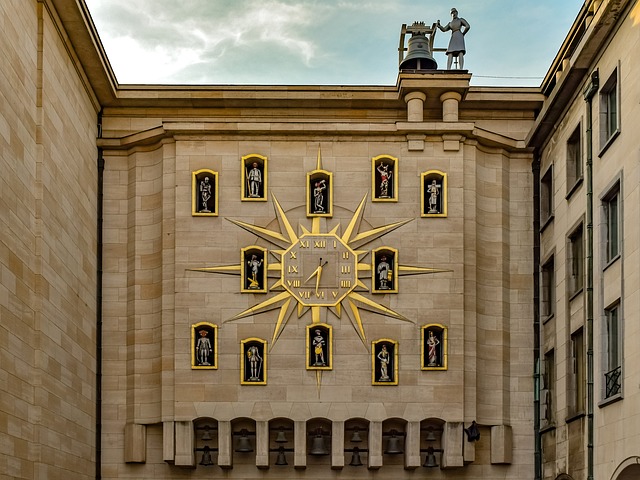
The following comparison table demonstrates how MST relates to other major North American standard and daylight time zones:
| Time Zone Name | Abbreviation | UTC Offset | Difference from MST (UTC-7) |
|---|---|---|---|
| Pacific Standard Time | PST | UTC-8 | 1 hour behind MST |
| Mountain Standard Time | MST | UTC-7 | Baseline reference |
| Pacific Daylight Time | PDT | UTC-7 | Same clock time as MST |
| Mountain Daylight Time | MDT | UTC-6 | 1 hour ahead of MST |
| Central Standard Time | CST | UTC-6 | 1 hour ahead of MST |
| Central Daylight Time | CDT | UTC-5 | 2 hours ahead of MST |
| Eastern Standard Time | EST | UTC-5 | 2 hours ahead of MST |
| Eastern Daylight Time | EDT | UTC-4 | 3 hours ahead of MST |
Common time zone traps and how to avoid miscommunications
Scheduling errors across Mountain Time regions usually occur because people mix up static standard designations with dynamic regional daylight observances. Avoiding these common errors prevents missed meetings, incorrect travel bookings, and disrupted software operations.
Trap 1: Confusing MST with MDT during summer months
If you schedule a conference call in July and label it “10:00 AM MST,” a colleague in Denver (observing MDT, UTC-6) will join an hour late if their calendar software strictly interprets MST as UTC-7. Always use the broad label “Mountain Time” (MT) or confirm whether local daylight saving time applies to participants.
Trap 2: Assuming all Mountain states share Arizona’s schedule
Because Phoenix is a major commercial hub, professionals often assume all surrounding states follow Arizona’s non-observance policy. Setting a meeting between Phoenix and Salt Lake City assuming they are in the same time zone works smoothly in December, but causes a one-hour discrepancy in June.
Trap 3: Misinterpreting flight and travel schedules
Airlines print tickets using local local clock times for departure and arrival airports. Planning itineraries involving mountain destinations requires accounting for local DST status upon arrival rather than calculating travel duration solely from standard time differentials.

Trap 4: Database logging and automated server timestamps
Software applications and cloud servers depend on explicit time definitions. Setting server cron jobs or database logging to fixed “MST” causes timing shifts relative to systems set to “America/Denver” when daylight saving time toggles. Always configure system software using standardized IANA time zone database names rather than three-letter time zone acronyms.
Best practices for scheduling across Mountain Time regions
Organizing virtual meetings and operating cross-border communication requires clear, structured protocols. Implementing precise time management rules eliminates ambiguity:
- Use explicit city designations: Specify the anchor city when communicating times (for example, write “9:00 AM Denver Time” or “9:00 AM Phoenix Time” instead of ambiguous acronyms).
- Leverage automated calendar invites: Send digital calendar invites (such as Google Calendar or Microsoft Outlook invites) that automatically process UTC offsets based on the recipient’s configured location.
- Specify IANA identifiers for system settings: When configuring software, databases, or online forms, select IANA location codes like
America/Phoenix(year-round UTC-7) orAmerica/Denver(dynamic MST/MDT) instead of static code strings likeMST. - Double-check border and tribal areas: When coordinating events in northern Arizona, eastern British Columbia, or western Saskatchewan, double-check whether the target township follows state, provincial, or tribal daylight saving policies.
Frequently asked questions
What is the current time in MST right now?
Mountain Standard Time (MST) is always fixed at UTC-7. To find current MST time, take Coordinated Universal Time (UTC) and subtract 7 hours, or subtract 2 hours from Eastern Standard Time (EST).
Does MST change during Daylight Saving Time?
MST itself does not change because it is a fixed UTC-7 offset. However, regions that observe daylight saving time transition from MST to MDT (UTC-6) between the second Sunday in March and the first Sunday in November, moving local clocks forward by one hour.
Is Arizona always on Mountain Standard Time?
Most of Arizona remains on Mountain Standard Time (UTC-7) year-round because state law opts out of daylight saving time. The main exception inside Arizona is the Navajo Nation, which observes daylight saving time and switches to MDT (UTC-6) during summer.
What is the difference between MST and EST?
When both zones observe standard time, MST (UTC-7) is exactly two hours behind EST (UTC-5). When Eastern Daylight Time (EDT, UTC-4) is active while a region remains on MST (UTC-7), MST is three hours behind EDT.
Which Canadian cities operate on Mountain Time?
Calgary and Edmonton in Alberta, along with Yellowknife in the Northwest Territories, operate on Mountain Time, switching between MST in winter and MDT in summer. Whitehorse in Yukon operates on UTC-7 year-round, matching MST clock time continuously.