
Converting 15 cm to inches gives an exact measurement of 5.90551181 inches, which is commonly rounded to 5.91 inches for most practical applications. This standard calculation relies on the 1959 international agreement establishing that 1 inch precisely equals 2.54 centimeters. At roughly 5.91 inches, a 15 cm length is slightly shorter than a US dollar bill and comparable to a small smartphone or standard pen.
This guide explains the exact conversion formula, key rounding errors to avoid, and helpful visual comparisons. It also outlines practical uses across crafting, interior design, engineering, and sewing.
Understanding the Metric and Imperial Systems
Before diving into the specific conversion, it’s helpful to grasp the origins and fundamental differences between the metric system (centimeters) and the imperial system (inches). The metric system, adopted by most of the world, is based on powers of 10, making conversions within the system exceptionally logical and straightforward. A centimeter, for instance, is one-hundredth of a meter.
In contrast, the imperial system, primarily used in the United States, has a more complex historical development. An inch, for example, was traditionally defined based on the width of a human thumb. This historical basis leads to less intuitive relationships between units like feet, yards, and miles. For practical purposes, understanding the standardized conversion factor is key.
The international agreement in 1959 established that 1 inch is precisely equal to 2.54 centimeters. This standardization is what underpins all accurate conversions between the two systems today, ensuring consistency whether you’re working on a project in London, New York, or Tokyo.
The Exact Conversion Formula: 15 cm to Inches
To convert any measurement from centimeters to inches, you use the established factor: 1 inch = 2.54 cm. Therefore, to find out how many inches are in a given number of centimeters, you divide the centimeter value by 2.54.
For our specific query, 15 cm to inches, the calculation is:
Inches = Centimeters / 2.54
So, 15 cm / 2.54 = 5.90551181 inches.
While this is the precise figure, in many practical applications, rounding is necessary and acceptable. However, the common mistake lies in when and how you round. Rounding too early in a calculation can introduce significant inaccuracies, especially in precise fields like engineering or detailed crafting.
When converting 15 cm, it’s generally advisable to keep several decimal places for intermediate calculations. For final measurements, the required precision will dictate how many decimal places you retain. For most common uses, rounding to two or three decimal places is sufficient, yielding 5.91 or 5.906 inches.
It’s also worth noting that some older or less precise tools might use a rounded conversion factor like 2.5 cm per inch. Using such a factor would give you 15 cm / 2.5 = 6 inches, which is close but not accurate enough for many applications. Always rely on the 2.54 cm per inch standard.
Common Mistakes to Avoid in Conversion
The journey from centimeters to inches, though short, is paved with potential pitfalls. Understanding these common mistakes can save you time, materials, and frustration, ensuring your measurements are spot-on. As of June 2026, these errors persist across various skill levels.
One of the most frequent errors is using an incorrect conversion factor. As mentioned, using 2.5 instead of 2.54 is a classic example. This seemingly small difference can accumulate rapidly in larger projects, leading to parts that don’t fit or designs that are fundamentally flawed. Always double-check that your calculator or software is set to the standard 2.54 factor.
Another common mistake is premature rounding. Imagine you need to cut a piece of wood that’s 15 cm long. If you convert 15 cm to 5.9 inches and then round this down to 5.9 inches for marking, you’ve already introduced a small error. For critical cuts, it’s better to work with 5.906 inches or even more decimal places if your measuring tool allows.
Rounding at the wrong stage is also problematic. If you are performing multiple calculations, for example, converting a width and then a height, and you round each intermediate result, the final accumulated error can be substantial. It’s best practice to perform all calculations with the full precision available and only round the final result to the precision required for the task.
Misinterpreting the question is another, albeit less common, error. Sometimes, users might search for “15 cm to inches” intending to find the inverse conversion (inches to cm). While this article focuses on cm to inches, it’s a reminder to always be clear about the direction of your conversion. For instance, if you have a measurement in inches and need to convert it to centimeters, you would multiply by 2.54.
Finally, reliance on outdated or unverified online converters can be an issue. While most are accurate, a poorly coded tool or one using an outdated standard can provide incorrect results. Stick to reputable conversion sites or perform the calculation manually using the 2.54 factor for absolute certainty.

Visualizing 15 Centimeters in Inches
Numbers can sometimes feel abstract. To truly grasp the measurement of 15 cm, it helps to visualize it in terms of familiar objects. This practical approach solidifies the conversion and makes it easier to apply in real-world scenarios.
Consider a standard US dollar bill. Its length is approximately 6.14 inches. Therefore, 15 cm, which is about 5.91 inches, is slightly shorter than a US dollar bill. This comparison gives you a tangible reference point.
Another common reference is a smartphone. Many modern smartphones, measured diagonally, range from about 5.5 inches to 6.7 inches. So, 15 cm is roughly the length of a smaller to mid-sized smartphone. If you’re working on a project that needs to accommodate a phone, knowing 15 cm is just shy of 6 inches can be very helpful.
For those in the crafting or sewing world, a standard ruler is often marked in both centimeters and inches. A typical ruler might be 12 inches long, which is about 30.48 cm. Marking 15 cm on such a ruler would place you very close to the halfway point of the 12-inch length, specifically just under the 6-inch mark.
Think about a common ballpoint pen. Many standard pens are around 5.5 to 6 inches long. So, 15 cm is approximately the length of a typical pen.
For those working with building materials or larger crafts, consider a standard 2×4 piece of lumber. A 2×4 is nominally 2 inches by 4 inches. In actual measurements, it’s closer to 1.5 inches by 3.5 inches. A length of 15 cm is a small fraction of a standard board length, useful for small brackets or joinery.
The goal here is to create a mental or physical anchor. When you encounter the measurement 15 cm, you can quickly relate it to something you know, such as “just shy of a dollar bill” or “about the length of a pen,” and immediately have a good sense of its scale in inches.
| Centimeters (cm) | Inches (in) | Real-World Comparison |
|---|---|---|
| 15 cm | 5.91 in | Slightly shorter than a US dollar bill; length of a smaller smartphone. |
| 5 cm | 1.97 in | Width of a standard credit card. |
| 10 cm | 3.94 in | Approximately the length of a standard pencil. |
| 20 cm | 7.87 in | Slightly longer than an 8-inch tablet screen. |
| 30 cm | 11.81 in | Roughly the length of a standard 12-inch ruler. |
Practical Applications and Where You’ll Use This Conversion
The ability to convert 15 cm to inches, and indeed any measurement between metric and imperial, is far from an academic exercise. It has tangible applications across numerous hobbies, professions, and everyday situations. As of June 2026, the need for accurate cross-system measurement remains constant.
Crafting and DIY Projects: Whether you’re building a birdhouse, sewing a garment, or creating custom decals for your gear, precise measurements are paramount. Many craft patterns or online tutorials might provide dimensions in centimeters, while your tools or preferred materials are marked in inches. For example, if a decal template specifies a 15 cm width, you’ll need to translate that to approximately 5.91 inches to cut it accurately from a roll of vinyl marked in inches.
Home Renovation and Interior Design: When planning furniture placement, hanging shelves, or installing custom cabinetry, you’ll frequently encounter mixed measurements. A European-designed cabinet might list dimensions in cm, while your existing wall studs or standard US lumber are measured in inches. Ensuring a 15 cm component fits within a 6-inch (approx. 15.24 cm) recess requires careful calculation.
Engineering and Technical Drawings: In fields like mechanical engineering or architecture, precision is non-negotiable. While many international standards are metric, legacy systems and specific industry practices might still use imperial units. A component designed to be 15 cm might need to interface with a system where all other parts are specified in inches. A slight miscalculation could lead to a component that simply doesn’t fit, causing production delays and increased costs.
Sewing and Fashion: Pattern makers and tailors often work with both systems. A specific measurement for a sleeve length, a waistband, or a hem might be given in centimeters. If your measuring tape is primarily in inches, converting 15 cm accurately ensures the garment fits correctly. For instance, a 15 cm inseam measurement needs to be precise.
3D Printing and Prototyping: Many 3D modeling software packages allow users to choose their preferred unit of measurement. However, if you’re importing a model designed in one system into a workflow that uses another, accurate conversion is vital. Ensuring a 15 cm object prints to the intended scale requires a precise conversion to inches, or vice versa.
The common thread across all these applications is the need for accuracy. The 15 cm to inches conversion is not just a number; it’s a bridge between two measurement languages, ensuring that your project, whether large or small, is executed flawlessly.
How to Perform the Conversion Manually or With Tools
While the math for converting 15 cm to inches is simple division, understanding the methods available can simplify the process. As of June 2026, a variety of tools exist to assist with unit conversions, catering to different needs and preferences.
Manual Calculation: The most fundamental method is direct calculation. You’ll need the conversion factor: 1 inch = 2.54 centimeters. To convert 15 cm to inches, simply divide 15 by 2.54. A basic calculator is all you need. Remember to retain enough decimal places for accuracy, especially if you plan to use the result in further calculations.
Online Converters: The internet offers many unit conversion tools. Websites like UnitConverters.net, InchCalculator.com, and Rapid Tables are popular and generally reliable for quick conversions. Simply input “15 cm” into the centimeters field, and the tool will display the equivalent in inches. These are excellent for one-off conversions or when you need an answer immediately.
Smartphone Apps: Many smartphones come with built-in conversion apps or allow you to download specialized unit converter applications. These apps are convenient as they are always accessible. Look for apps that are regularly updated and have good user reviews to ensure accuracy.
Spreadsheet Software: For those working with multiple conversions or large datasets, spreadsheet software like Microsoft Excel or Google Sheets can be incredibly powerful. You can use built-in functions such as `=CONVERT(15, “cm”, “in”)` in Google Sheets or Excel (ensure units are correctly formatted) to perform the conversion. This is ideal for projects involving numerous measurements.
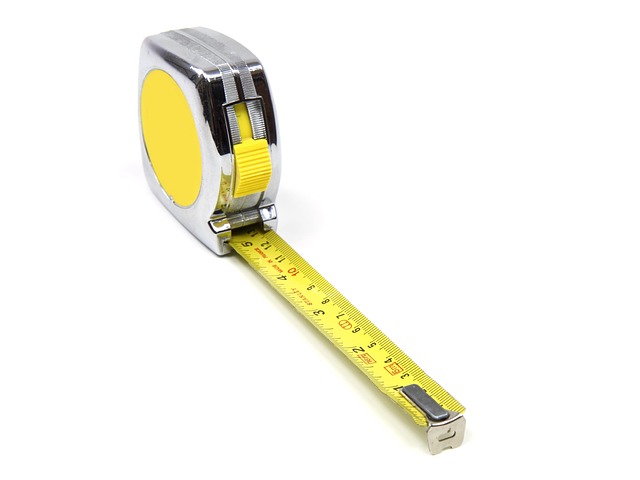
Physical Measurement Tools: While not a direct conversion tool, understanding your physical tools is essential. A ruler or tape measure marked with both centimeters and inches allows for direct measurement. However, if you are given a specification in one unit and need to measure in another, you will still need to perform the conversion mentally or with an auxiliary tool.
The key is to choose the method that best suits your situation. For a quick check, an online converter is ideal. For critical applications involving many data points, a spreadsheet is more efficient. For a fundamental understanding, manual calculation is irreplaceable.
The Importance of Precision in Measurements
In a world increasingly reliant on digital precision, the accuracy of our measurements, even seemingly simple ones like converting 15 cm to inches, carries significant weight. As of June 2026, the consequences of imprecision range from minor annoyances to major failures, impacting everything from consumer products to complex industrial applications.
Consider the manufacturing of interchangeable parts. If a component designed to be 15 cm (5.9055 inches) is manufactured even a fraction of a millimeter off, it might not fit smoothly with other parts. In high-volume production, this can lead to significant waste, increased manufacturing costs, and delays in product assembly. The automotive and aerospace industries, for example, demand tolerances measured in microns, where a simple conversion error could be catastrophic.
In construction, precision is equally critical. Building codes often specify dimensions for structural elements, safety features, and accessibility. A 15 cm dimension that’s incorrectly translated to inches could result in a structure that doesn’t meet safety standards, potentially leading to costly rework or even posing a risk to occupants. For instance, ensuring a clear pathway for accessibility often relies on exact measurements translated across systems.
Even in less critical fields like home decor or crafting, precision matters for aesthetic and functional reasons. Hanging a picture frame, installing a shelf, or cutting fabric based on inaccurate measurements can lead to visible flaws. A poorly aligned shelf might sag, or a custom-fit curtain might not hang correctly, diminishing the overall quality of the finished product.
The standardization of the inch to 2.54 centimeters is a testament to the global recognition of the need for precise and universally understood measurements. By respecting this standard and performing conversions with care, we ensure that our work is not only accurate but also compatible with global standards and practices. This diligence builds trust and reliability in our outputs.

Sources: BL 15-inch Mk I naval gun
Frequently Asked Questions About 15 cm to Inches
What is the exact conversion for 15 cm to inches?
As of June 2026, 15 centimeters is precisely 5.90551181 inches. This is derived from the standard conversion factor where 1 inch equals 2.54 centimeters.
How do I convert cm to inches if I don’t have a calculator?
You can approximate by knowing that 1 inch is about 2.5 cm. Divide 15 by 2.5, which gives you 6 inches. For more accuracy, use the 2.54 factor mentally or by simple long division.
What is the most common mistake when converting 15 cm to inches?
The most common mistake is using an inaccurate conversion factor, such as 2.5 instead of 2.54, or rounding the result too early in the calculation process.
Can I use a standard ruler to convert 15 cm to inches?
Yes, most standard rulers are marked with both centimeters and inches. You can directly read the inch equivalent next to the 15 cm mark, which should be approximately 5.91 inches.
Why is it important to be precise when converting 15 cm to inches?
Precision is crucial in many applications like crafting, engineering, and construction where slight inaccuracies can lead to parts not fitting, projects failing, or safety issues.
Where can I find a reliable converter for 15 cm to inches?
Reputable online conversion websites like UnitConverters.net, InchCalculator.com, and The Calculator Site, as well as most smartphone calculator apps, offer reliable conversion tools.
Is the conversion factor for cm to inches always 2.54?
Yes, the international standard adopted in 1959 defines 1 inch as exactly 2.54 centimeters. This factor is consistent worldwide.
Conclusion: Mastering Your Measurements
Understanding how to convert 15 cm to inches is a fundamental skill that transcends specific industries and hobbies. Whether you’re a seasoned professional or a weekend DIY enthusiast, mastering this simple conversion ensures accuracy and efficiency in your projects. By adhering to the precise factor of 2.54 cm per inch and avoiding common pitfalls like premature rounding or using incorrect factors, you can confidently translate measurements between metric and imperial systems.
As you tackle your next project, remember that precision starts with understanding. Use reliable tools, visualize your measurements, and always double-check your work. This attention to detail won’t only prevent mistakes but also elevate the quality and success of your endeavors.
Source: Britannica