A length of 70 centimeters (70cm) is equal to 27.56 inches (or exactly 27.5590551 inches), which translates to 2 feet 3.56 inches or roughly 27 9/16 inches on an imperial tape measure. To calculate it manually, divide 70 by the standard metric-to-imperial factor of 2.54.
This guide explains three step-by-step conversion methods, tape measure fractional equivalents, and a quick reference chart for surrounding metric lengths. It also outlines the 1959 International Yard and Pound Agreement that defined the inch and examines practical 70 cm sizing for apparel, checked luggage, picture frames, monitor screens, and furniture.
70cm to Inches: Exact Conversion and Practical Sizing Guide
70 centimeters is equal to 27.56 inches (or exactly 27.5590551 inches). To convert 70cm to inches yourself, divide 70 by 2.54, which gives you 27.56 inches—equivalent to 2 feet 3.56 inches or roughly 27 9/16 inches on a standard imperial tape measure.
Whether you are checking clothing dimensions, measuring imported furniture, cutting material for a craft project, or buying framed artwork online, converting between the metric system and imperial system requires absolute precision. A length of 70 cm is a common dimension in product specifications worldwide, but translating it into feet and inches involves understanding both exact decimal formulas and fractional tape measure markings.
How do you convert 70cm to inches manually?
To convert any measurement from centimeters to inches, you use the standard metric-to-imperial conversion factor where 1 inch equals exactly 2.54 centimeters. Performing a manual conversion gives you full control over the precision of your results, whether you need a quick mental estimate or an exact decimal figure for technical work.
Method 1: Division by 2.54
The standard formula requires dividing your length in centimeters by 2.54:
Inches = Centimeters / 2.54
For a 70 cm measurement:
70 / 2.54 = 27.559055118… inches
Rounding to two decimal places produces 27.56 inches. For general everyday work, rounding to two decimal places provides more than enough accuracy.
Method 2: Multiplication by 0.393701
Alternatively, you can multiply the centimeter value by 0.393700787 (the number of inches in one centimeter):
Inches = Centimeters * 0.393700787
For a 70 cm length:
70 * 0.393700787 = 27.559055 inches
Both methods yield the exact same answer. Multiplication is often easier if you are using simple non-scientific calculators that handle multiplication faster than floating-point division.
Method 3: Quick mental estimate
If you need an immediate ballpark figure without a calculator, multiply the centimeter value by 4 and divide by 10, then subtract a small allowance:
- Multiply 70 by 4 = 280.
- Divide 280 by 10 = 28 inches.
- Subtract roughly 0.4 inches to adjust for the 1.6% overestimate.
- Estimated total = 27.6 inches (extremely close to the true 27.56 inches).
What is 70cm on an imperial ruler or tape measure?
Standard imperial tape measures and rulers used in carpentry, sewing, and construction do not display decimals like 27.56 inches. Instead, they divide each inch into binary fractions: halves (1/2), quarters (1/4), eighths (1/8), sixteenths (1/16), and sometimes thirty-seconds (1/32).
Because 0.559 inches is virtually identical to 0.5625 inches (9/16 of an inch), 70 cm lines up almost perfectly with 27 9/16 inches on a standard ruler. The difference between 27.559 inches and 27 9/16 inches is only 0.0034 inches (less than 0.09 millimeters), which is thinner than a single sheet of printer paper.
| Fractional Designation | Decimal Value | Distance from Exact 70cm (27.559″) | Practical Suitability |
|---|---|---|---|
| 27 1/2 inches | 27.5000″ | -0.0590″ (~1.50 mm short) | Rough estimation only |
| 27 9/16 inches | 27.5625″ | +0.0034″ (~0.09 mm long) | Best match for woodworking & crafts |
| 27 19/32 inches | 27.5938″ | +0.0347″ (~0.88 mm long) | Slightly too long |
| 27 5/8 inches | 27.6250″ | +0.0659″ (~1.67 mm long) | Noticeably loose fit |
When marking a cut line on timber, fabric, or plastic sheets, measuring to 27 9/16 inches will give you an exact match for a 70 cm requirement.
70 cm to inches reference chart (65 cm to 75 cm)
When planning projects that involve multiple metric measurements, having a surrounding conversion grid helps you evaluate nearby dimensions quickly. The table below covers lengths from 65 cm to 75 cm with exact decimals, practical rounded values, and nearest tape measure fractions.
| Centimeters (cm) | Exact Inches | Rounded Inches | Nearest 1/16 Inch | Feet and Inches |
|---|---|---|---|---|
| 65 cm | 25.5905″ | 25.59″ | 25 9/16″ | 2 ft 1 9/16 in |
| 66 cm | 25.9843″ | 25.98″ | 26″ | 2 ft 2 in |
| 67 cm | 26.3780″ | 26.38″ | 26 3/8″ | 2 ft 2 3/8 in |
| 68 cm | 26.7717″ | 26.77″ | 26 3/4″ | 2 ft 2 3/4 in |
| 69 cm | 27.1654″ | 27.17″ | 27 3/16″ | 2 ft 3 3/16 in |
| 70 cm | 27.5591″ | 27.56″ | 27 9/16″ | 2 ft 3 9/16 in |
| 71 cm | 27.9528″ | 27.95″ | 27 15/16″ | 2 ft 3 15/16 in |
| 72 cm | 28.3465″ | 28.35″ | 28 3/8″ | 2 ft 4 3/8 in |
| 73 cm | 28.7402″ | 28.74″ | 28 3/4″ | 2 ft 4 3/4 in |
| 74 cm | 29.1339″ | 29.13″ | 29 1/8″ | 2 ft 5 1/8 in |
| 75 cm | 29.5276″ | 29.53″ | 29 1/2″ | 2 ft 5 1/2 in |
Why is 1 inch defined as exactly 2.54 centimeters?
At the heart of converting any centimeter measurement to inches lies a fundamental constant: 1 inch is defined as exactly 2.54 centimeters. International agreement has established this definition, and it remains unchanged. It is not an approximation, but a precise mathematical relationship that underpins all centimeter-to-inch calculations.
Before 1959, the United States, the United Kingdom, Canada, Australia, and New Zealand maintained slightly different definitions of the inch based on physical standard yards. To resolve discrepancies in precision manufacturing and international trade, delegates from these nations signed the International Yard and Pound Agreement of 1959. This treaty fixed the international yard at exactly 0.9144 meters, which mathematically established 1 inch as exactly 2.54 centimeters (25.4 millimeters).
This means that to convert centimeters to inches, you will always divide the centimeter value by 2.54. Conversely, to convert inches to centimeters, you multiply the inch value by 2.54. This simple rule applies whether you are converting 1cm, 10cm, or precisely 70cm.
For example, if you are working on a custom lettering project and a client specifies a design element that needs to be 70cm wide, translating that to inches helps you visualize it on an imperial-ruled workspace or understand its scale relative to standard US paper sizes.
The conversion factor is legally enforced by government bodies, including the National Institute of Standards and Technology (NIST) in the United States and the National Physical Laboratory (NPL) in the UK. Another common distance standard, like converting kilometers to miles, relies on similar fixed unit definitions; see another conversion article for details on long-distance metric conversions.
Where do you encounter 70cm measurements in real life?
Understanding what 70 cm (27.56 inches) looks like in practical terms is crucial when dealing with real-world products, sizing charts, or construction tasks.
1. Apparel, waist sizing, and trousers
In clothing manufacturing, a 70 cm measurement frequently appears on waistlines, inseams, and coat lengths:
- Waist size: A 70 cm waist corresponds to a 27.5-inch waist. In US women’s clothing, this usually maps to a size 4 or 6 (Small). In US men’s sizing, a 70 cm waist is a size 27 or 28, often found in slim or extra-small cuts.
- Trouser inseam: A 70 cm inseam equals 27.5 inches, which is an extra-short or ankle-length cut for adult trousers.
- Jacket length: A 70 cm back length on a shirt or coat falls right around the upper hip level on an average-height adult.
2. Luggage and travel gear
A 70 cm height (27.5 inches) is a standard specification for medium-to-large checked suitcases. International carriers often enforce strict linear dimension rules (length + width + height). A suit bag or spinner suitcase measuring 70 cm tall will easily fit within standard airline checked bag limits, but it is too large for carry-on overhead bins, which generally cap height at 55 cm (21.5 inches).
3. Picture frames and poster prints
European and Asian print sizing commonly uses 50 x 70 cm or 70 x 100 cm formats. When buying frames in North America:
- A 50 x 70 cm print translates to 19.69 x 27.56 inches. A standard US frame size of 20 x 28 inches can hold this print with a small mat border.
- A 70 x 100 cm print translates to 27.56 x 39.37 inches, which fits closely into a 28 x 40 inch poster frame.
4. TV screens and computer displays
When display manufacturers list a 70 cm screen size, they are measuring the diagonal distance from corner to corner. A 70 cm diagonal screen equals a 27.5-inch monitor or television. On a standard widescreen display with a 16:9 aspect ratio, a 70 cm diagonal translates to approximately:
- Screen Width: 24.0 inches (60.9 cm)
- Screen Height: 13.5 inches (34.3 cm)
5. Furniture and interior design
In interior architecture, 70 cm is a common functional height threshold:
- Counter stools: Seat heights around 70 cm (27.5 inches) are designed specifically to pair with counter-height tables and kitchen islands (which stand 35 to 37 inches tall).
- Desk depth: Standard office desks are often manufactured with a 70 cm (27.56 in) depth, offering adequate space for a keyboard and monitor without taking up excess floor area.
6. Model making, crafts, and hobby displays
For hobbyists, miniature sculptors, and wargamers, converting metric cuts to imperial stock is a regular task. If you are building custom gaming terrain, assembling a large miniature display board, or applying wide decals, working in centimeters requires exact imperial alignment. For smaller accent dimensions on craft projects, see another conversion guide to handle smaller layout elements.
When designing custom lettering for signage or vehicle graphics, converting overall dimensions between centimeters and inches prevents distortion when scaling vector paths; read more on sizing in CAN Bus Security: Protecting Your Vehicle’s Digital Backbone.
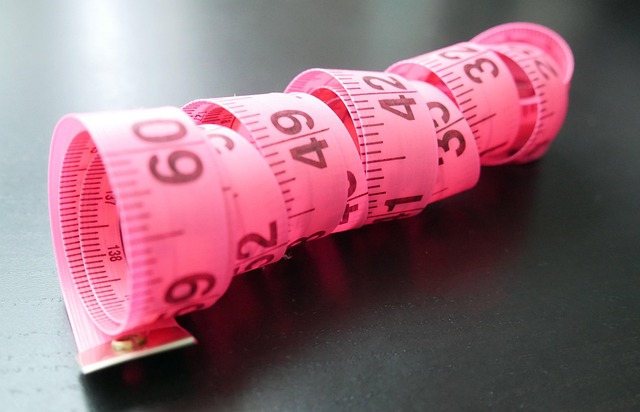
Digital conversion tools vs. manual calculation
For a specific calculation like 70cm to inches, you have two primary options: using an online tool or calculating the result manually. Choosing the right method depends on the level of precision your task demands and whether you are working in the workshop or at a computer.
Online Converters: Automated calculation engines, including specialized measurement tools and search engines like 70 cm to inches – Wolfram, deliver instant decimal answers down to dozens of precision places. These platforms eliminate human calculation errors and are ideal for quick checks while drafting or shopping online.
Manual Calculation: Dividing by 2.54 on paper or with a pocket calculator gives you independence from network connectivity. Manual math also forces you to evaluate whether rounding to two decimal places (27.56″) or finding a tape measure fraction (27 9/16″) is better suited to your physical work.
Different industries require different precision levels when handling converted measurements:
- Carpentry & Woodworking: Precision to 1/16 inch (0.0625″) or 1/32 inch (0.03125″) is expected. Rounding 70 cm to 27 9/16 inches gives an error of under 0.1 mm, which is well within standard saw blade tolerances.
- Sewing & Textile Design: Precision to 1/8 inch (0.125″) is usually sufficient because fabric stretches. Rounding 70 cm to 27.5 inches or 27 1/2 inches works well for hem lines.
- 3D Printing & CAD Modeling: Exact decimal values (27.559055 inches or 70.00 mm) must be entered into software. Rounding prematurely will cause mating components to misalign.
- Interior Decorating & Space Planning: Rounding to the nearest half-inch (27.5″) is standard for determining whether a bookshelf or desk fits along a bedroom wall.
Common mistakes when converting 70 cm to inches
Converting metric units to imperial values seems straightforward, but simple mistakes can cause costly material waste or incorrect fitting. Here are the most frequent conversion pitfalls and how to avoid them:
1. Multiplying instead of dividing
Because an inch is longer than a centimeter, any length expressed in inches will always have a smaller numerical value than the same length expressed in centimeters. If you mistakenly multiply 70 by 2.54, you get 177.8 inches (over 14 feet!), which is clearly wrong. Remember: cm to inches = divide by 2.54.
2. Rounding the conversion factor to 2.5
Some people try to simplify arithmetic by dividing by 2.5 instead of 2.54:
70 / 2.5 = 28.0 inches
Dividing by 2.5 produces an error of 0.44 inches (nearly 7/16 of an inch!). In cabinet building, frame construction, or garment tailoring, being off by nearly half an inch will ruin the fit completely. Always use 2.54.
3. Confusing millimeters and centimeters
A length of 70 millimeters (mm) is only 7 centimeters. If you apply the formula to 70 mm thinking it is centimeters, you will calculate 27.56 inches when the actual answer is 2.76 inches. Always check the unit labels on architectural plans and product specification sheets before calculating.
4. Misreading fraction marks on a tape measure
When transferring 27.56 inches to a tape measure, do not confuse the 1/2-inch mark (27.500″) with the 9/16-inch mark (27.5625″). Marking a cut at 27 1/2 inches leaves your workpiece 1/16 of an inch short.
Frequently asked questions
How many inches are in 70 cm exactly?
70 centimeters is equal to exactly 27.559055118110236 inches. For practical everyday use, this value is rounded to 27.56 inches.
What is 70cm in feet and inches?
70 cm is equal to 2 feet and 3.56 inches (2′ 3.56″). On a standard tape measure, this corresponds to 2 feet 3 9/16 inches.
What is a 70cm waist size in US clothing?
A 70 cm waist equals 27.5 inches. In US women’s sizing, this generally corresponds to a size 4 or 6 (Small), while in US men’s trousers, it represents an extra-small or slim-fit size 27 to 28.
What frame size fits a 70 cm artwork print?
A 70 cm length equals 27.56 inches. For a 50 x 70 cm print, a standard 20 x 28 inch frame offers a clean fit with minimal mat trimming, while a 70 x 100 cm print fits inside a standard 28 x 40 inch poster frame.
For more detailed historical background on international unit standards, refer to Britannica.