Eighty kilograms (80 kg) equals 176.37 pounds (lbs), or 12 stone and 8.37 pounds. To calculate 80 kg in pounds, multiply 80 by the standard conversion factor of 2.20462. Understanding accurate unit conversion is essential across international travel, sports, healthcare, and shipping logistics.
The rest of this guide provides the full math breakdown, quick mental shortcuts, and conversions into stone and pounds. It also details weight comparison tables, real-world contexts in health and freight, everyday objects weighing roughly 80 kg, and common conversion mistakes to avoid.
80 kg in Pounds
Eighty kilograms equals 176.37 pounds (lbs). To calculate 80 kg in pounds, multiply 80 by the standard conversion factor of 2.20462, which yields 176.3696 lbs (or 12 stone and 8.37 pounds).
Because kilograms measure mass in the metric system while pounds belong to the US customary and imperial systems, understanding accurate unit conversion is essential across international travel, sports, healthcare, and shipping logistics. Below is the full breakdown of how to convert 80 kg, shortcut mental math tricks, weight chart comparisons, and real-world contexts.
How do you calculate 80 kg to pounds?
Converting kilograms to pounds requires multiplying the mass in kilograms by the number of international avoirdupois pounds in one kilogram. One international kilogram is defined as approximately 2.2046226218 pounds.
The standard math breakdown for 80 kg is:
80 kg × 2.20462262 lbs/kg = 176.36981 lbs
Depending on how precise your work needs to be, you can round this result to different levels of accuracy:
- Exact decimal: 176.3698 lbs
- Standard decimal (2 places): 176.37 lbs
- Single decimal place: 176.4 lbs
- Nearest whole pound: 176 lbs
If you are performing a reverse conversion from pounds to kilograms, divide the weight in pounds by 2.20462, or multiply by 0.45359237. For example, 176.37 lbs ÷ 2.20462 = 80.00 kg.
Three quick mental math shortcuts
When you do not have a calculator nearby, you can estimate 80 kg in pounds in your head using three different techniques depending on the accuracy you need:
- Double it and add 10% (Most Accurate Shortcut): First, double 80 to get 160. Next, calculate 10% of 160, which is 16. Finally, add 16 to 160 to get 176 lbs. This quick method gets you within 0.37 lbs of the exact answer without writing anything down.
- Multiply by 2.2: Multiply 80 by 2 directly (160) and add 80 multiplied by 0.2 (16). This gives 176 lbs, providing a fast baseline for body weight or gym equipment.
- The High-Precision Addition: Take your 176 lbs estimate from the first method and add 0.35 lbs to account for the remaining 0.00462 factor. This brings your mental total to 176.35 lbs, which is within 0.02 lbs of absolute precision.
What is 80 kg in stone and pounds?
In the United Kingdom and Ireland, personal body weight is frequently measured in stone and pounds rather than purely in pounds or kilograms. One stone is equivalent to 14 avoirdupois pounds.
To convert 80 kg into stone and pounds:
- Convert 80 kg to total pounds: 80 × 2.20462 = 176.37 lbs.
- Divide total pounds by 14 to find whole stones: 176.37 ÷ 14 = 12.5978 stones.
- Multiply the remaining fraction (0.5978) by 14 to find remaining pounds: 0.5978 × 14 = 8.37 lbs.
Therefore, 80 kg is equal to 12 stone and 8.37 pounds (commonly written as 12 st 8.37 lb, or rounded to 12 st 8 lb).
Weight conversion table: 75 kg to 85 kg
When tracking health metrics, fitness progress, or baggage allowances, seeing nearby values provides useful context. The table below compares kilograms, exact pounds, rounded pounds, and stone representations across the 75 kg to 85 kg range.
| Kilograms (kg) | Exact Pounds (lbs) | Rounded Pounds (lbs) | Stone & Pounds (st lb) |
|---|---|---|---|
| 75 kg | 165.347 lbs | 165.35 lbs | 11 st 11.35 lb |
| 76 kg | 167.551 lbs | 167.55 lbs | 11 st 13.55 lb |
| 77 kg | 169.756 lbs | 169.76 lbs | 12 st 1.76 lb |
| 78 kg | 171.960 lbs | 171.96 lbs | 12 st 3.96 lb |
| 79 kg | 174.165 lbs | 174.17 lbs | 12 st 6.17 lb |
| 80 kg | 176.370 lbs | 176.37 lbs | 12 st 8.37 lb |
| 81 kg | 178.574 lbs | 178.57 lbs | 12 st 10.57 lb |
| 82 kg | 180.779 lbs | 180.78 lbs | 12 st 12.78 lb |
| 83 kg | 182.983 lbs | 182.98 lbs | 13 st 0.98 lb |
| 84 kg | 185.188 lbs | 185.19 lbs | 13 st 3.19 lb |
| 85 kg | 187.393 lbs | 187.39 lbs | 13 st 5.39 lb |
Where is 80 kg commonly encountered?
An 80 kg mass carries different practical implications depending on the industry or setting in which you encounter it.

Human body weight and health
An adult weighing 80 kg (176.37 lbs) sits near average body mass figures for men in many modern European nations. According to global health standards, whether 80 kg represents a healthy body mass index (BMI) depends entirely on height:
- Height 5 ft 8 in (173 cm): BMI is approximately 26.7 (classified as overweight).
- Height 5 ft 11 in (180 cm): BMI is approximately 24.7 (classified in the normal/healthy range).
- Height 6 ft 2 in (188 cm): BMI is approximately 22.6 (firmly in the healthy middle range).
Weightlifting and athletic competition
In gym environments and strength sports, 80 kg is a common weight benchmark:
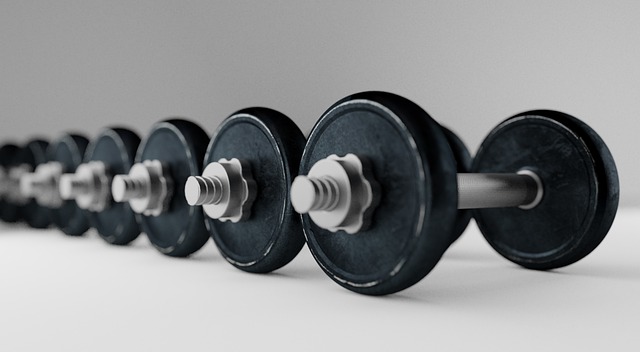
- Barbell configuration: A standard Olympic barbell weighs 20 kg (44 lbs). To load a barbell to 80 kg (176 lbs), you add 30 kg to each side (typically one 20 kg plate and one 10 kg plate per side).
- Combat sports weight classes: In amateur boxing, mixed martial arts (MMA), and Olympic wrestling, weight divisions often group near 77 kg to 80 kg (welterweight or middleweight categories).
Airline baggage limits
Standard checked baggage allowances on commercial airlines are set at either 23 kg (50 lbs) for economy class or 32 kg (70 lbs) for business class and heavy baggage exemptions. Therefore, 80 kg is far beyond any single suitcase limit. An 80 kg shipment corresponds to roughly three full 25 kg check-in bags or four standard 20 kg allowance bags.
Freight and heavy courier shipping
In logistics, consumer parcel services like FedEx, UPS, and DHL generally enforce a weight ceiling of 70 kg (150 lbs) for standard courier packages. A item weighing 80 kg exceeds single-driver parcel handling rules, meaning it must be loaded onto a pallet and shipped via LTL (Less-Than-Truckload) freight using a forklift or pallet jack.
What items weigh approximately 80 kg?
To visualize what 80 kg (176.37 lbs) feels like, compare it to common objects and equipment in the table below.
| Item / Subject | Weight in Kilograms (kg) | Weight in Pounds (lbs) | Practical Context |
|---|---|---|---|
| Average Adult Male (US) | 89 kg | 196 lbs | Slightly heavier than 80 kg |
| Medium Domestic Refrigerator | 70–90 kg | 154–198 lbs | 80 kg sits right in the middle for standard kitchen models |
| Great Dane or St. Bernard | 65–85 kg | 143–187 lbs | Full-grown male giant dog breed |
| Washing Machine (Front-Load) | 65–80 kg | 143–176 lbs | Includes internal concrete counterweights |
| Two Standard Bags of Cement | 80 kg | 176.37 lbs | Two 40 kg construction sacks combined |
How are kilograms and pounds defined?
The distinction between kilograms and pounds comes from two different historical traditions in measurement science.
The kilogram was developed during the French Revolution as part of the metric system, designed to create a rational, decimal-based standard based on physical natural constants. Initially defined as the mass of one liter of pure water, the kilogram’s definition was refined over centuries. In 2019, international scientists redefined the kilogram using the Planck constant, making it permanently precise and immune to physical degradation.
The pound originated from Roman and Anglo-Saxon weight systems, evolving into the avoirdupois system used for general trade. Historically, pounds varied across towns and industries. To resolve trade confusion, six nations—including the United States, United Kingdom, Canada, Australia, and New Zealand—signed the International Yard and Pound Agreement in 1959.
According to the National Institute of Standards and Technology (NIST), this international treaty established that one international avoirdupois pound is legally fixed at exactly 0.45359237 kilograms. Because this factor is defined by law, the core mathematical conversion factor between 80 kg and pounds remains static globally.
What mistakes happen when converting 80 kg to pounds?
Although multiplying by 2.2 sounds simple, several predictable errors occur during conversion:
1. Over-simplifying the multiplier as 2.2
Multiplying 80 kg by 2.2 gives 176.0 lbs. While fine for casual conversation, it drops 0.37 lbs (about 168 grams). In clinical medicine dosing or freight tariff calculations, losing nearly half a pound per 80 kg creates compound errors over larger batches.
2. Dividing instead of multiplying
Because kilograms are larger units than pounds, converting kilograms to pounds must always result in a higher number. If you accidentally divide 80 by 2.20462, you get 36.28. If your converted figure is lower than 80, you used the inverse math step.
3. Confusing avoirdupois pounds with troy pounds
Standard body weight, luggage, freight, and grocery measurements use the avoirdupois pound (16 ounces per pound). However, precious metals like gold and silver use the troy pound system. A troy pound equals only 12 troy ounces (0.37324 kg). Converting 80 kg into troy pounds yields 214.34 troy lbs. Unless trading bullion, always stick to avoirdupois pounds.
4. Misinterpreting luggage and freight limits
A common error among international travelers is assuming an airline limit stated as “50 lbs” allows up to 25 kg. In reality, 50 lbs equals 22.68 kg. Packing 25 kg puts your bag at 55.12 lbs, triggering heavy baggage fees. Conversely, an 80 kg weight exceeds standard baggage allowances by over 100 pounds.
Frequently asked questions
Is 80 kg heavy for a person in pounds?
At 176.37 pounds, 80 kg is a typical weight for adult men between 5 ft 10 in and 6 ft 1 in tall. Whether it is considered heavy depends on height, body composition, muscle density, and individual body frame.
How do I quickly estimate 80 kg to pounds without a calculator?
Adding 160 plus 16 gives 176 pounds, which is within 0.37 lbs of the exact answer of 176.37 lbs.
Why does 1 kg equal 2.20462 pounds?
This conversion comes from the international standard set in 1959, which defined one international avoirdupois pound as exactly 0.45359237 kilograms. Taking 1 divided by 0.45359237 gives approximately 2.20462262 pounds per kilogram.
How many stone and pounds is 80 kg?
80 kilograms equals 12 stone and 8.37 pounds. Divide 176.37 total pounds by 14 to find 12 whole stones, leaving a remainder of 8.37 pounds.