

A cute fox derives its endearing appearance from biological survival tools like oversized ears, expressive eyes, delicate muzzles, and plush tails that help it hunt, regulate body temperature, and navigate harsh terrain. These physical traits combine with playful kit behaviors and dramatic hunting leaps to make species like the red, Arctic, and Fennec foxes popular wildlife figures.
This guide examines the visual and behavioral attributes of various global species, including the Arctic, Fennec, and Swift foxes. It also details the severe practical, financial, and legal challenges of keeping a fox as a pet, alongside methods for coexisting safely with urban foxes.
Why Cute Foxes Captivate Us and How to Enjoy Them Responsibly
A cute fox appeals to human instincts through baby-like physical traits such as oversized ears, large expressive eyes, delicate muzzles, and plush, voluminous tails called brushes. These striking visual traits, combined with playful kit behaviors and nimble hunting leaps, make species like red, Arctic, and Fennec foxes exceptionally popular wildlife figures.
While foxes are often shared online through cheerful photographs and fan art, their endearing appearances are evolutionary survival tools. Every fluff of fur, wide ear, and energetic pounce developed to help these adaptable canids hunt small prey, regulate body temperature, and navigate harsh terrain. Understanding what makes a fox attractive helps us admire their beauty while honoring their role as wild predators in global ecosystems.
What Makes a Fox So Visually and Behaviorally Appealing?
Scientists refer to the biological trigger behind cuteness as “baby schema” or Kindchenschema. Evolutionary biologist Konrad Lorenz noted that features such as large heads relative to bodies, prominent round eyes, high foreheads, and small muzzles automatically activate nurturing responses in humans. A fox possesses these precise proportions, particularly during youth or in naturally small-bodied adult species.
Key Physical Attributes
- The Brush (Tail): A fox’s tail, known as a brush, accounts for up to one-third of its total body length. Beyond looking soft and luxurious, it serves as a steering rudder during swift chases, a counterweight during sharp turns, a signaling mechanism to communicate with other foxes, and a warm muffler wrapped across the nose during sleep.
- Oversized Ears: Pointed ears sitting high on the skull give foxes an alert, curious expression. In species like the Fennec fox, giant ears act as thermal radiators to dump desert heat while pinpointing underground insect movements.
- Expressive Facial Marking: White markings around the chin, dark tear lines running from the inner eyes, and black muzzle trim accentuate facial movements, giving human onlookers the impression of smiles, curiosity, or gentle surprise.
- Lush Winter Coats: Dense underfur topped with long guard hairs creates a rounded, velvety silhouette that enhances the animal’s cuddle-like appearance.
Endearing Behavioral Traits
Physical traits are only half of the equation. Behavioral patterns significantly shape why people search for cute fox videos and pictures:
- Kit Playfulness: Young foxes, called kits or pups, spend their early weeks tumbling, wrestling, chasing dry leaves, and staging mock battles. This social play develops essential coordination, biting boundary control, and hunting reflexes.
- The Mousing Jump: When hunting small rodents under grass or deep snow, a fox tilts its head to calibrate sound cues, crouches low, and leaps up to three feet into the air. It lands front-paws-first directly onto the target. This dramatic bow-shaped jump looks remarkably like a dog playing with a toy.
- Inquisitive Stance: Foxes are naturally curious. When encountering unfamiliar sounds or objects, they frequently cock their heads from side to side to align their hearing ears, mimicking human gestures of active listening.
Comparing Cute Fox Species Across the Globe
While most people visualize the classic rust-red coat of the red fox, the genus Vulpes contains 12 true fox species, alongside several false fox species in other genera. Each has evolved distinct traits that yield a unique version of cuteness.
| Species Name | Distinctive Cute Feature | Primary Habitat | Native Range | Survival Function of Feature |
|---|---|---|---|---|
| Red Fox (Vulpes vulpes) | Vibrant orange-red coat, dark stockings, plush white-tipped brush | Forests, grasslands, suburban gardens | North America, Europe, Asia, Australia | Tail offers balance and winter warmth; dark legs blend into brush shadow. |
| Arctic Fox (Vulpes lagopus) | Snowy white winter pelt, rounded ears, short fluffy snout | Arctic tundra, coastal sea ice | Circumpolar Arctic regions | Short ears and stout muzzle prevent frostbite; white coat camouflage. |
| Fennec Fox (Vulpes zerda) | Massive bat-like ears, tiny body, cream-colored fur | Arid sand dunes | Sahara Desert and Sinai Peninsula | Large ear surface area sheds body heat; foot pads lined with fur prevent sand burns. |
| Swift Fox (Vulpes velox) | House-cat size, buff-yellow coat, big dark eyes | Shortgrass prairies | Great Plains of North America | Lightweight frame facilitates rapid speeds over 30 mph to escape predators. |
| Corsac Fox (Vulpes corsac) | Silver-grey fluff, thick winter coat, petite build | Steppes and semi-deserts | Central Asia, China, Mongolia | Dense fur traps insulating air layer; small stature reduces food demands in harsh climates. |
The Arctic fox demonstrates how extreme survival adaptations shape visual traits. Its short ears lose far less body heat than the wide ears of southern species, while thick fur on the soles of its paws acts like natural snowshoes. Meanwhile, the desert-dwelling Fennec fox displays the opposite extreme: colossal ears measuring up to six inches long on an animal weighing under three pounds.
Can You Keep a Cute Fox as a Pet? The Unvarnished Reality
Viral internet videos showing domesticated foxes cuddling on couches generate immense interest in fox ownership. However, keeping a wild canid in a residential home presents massive practical, financial, and ethical challenges that make them unsuitable for almost all households.
Wild Foxes vs. Domesticated Foxes vs. Exotic Captive Breeds
It is important to distinguish between three categories of foxes that people consider as pets:
- Wild Foxes (Red, Gray, Arctic): Rescued or hand-reared wild foxes retain unbroken wild instincts. They cannot be reliably house-trained, will destroy furniture, and display high anxiety in indoor settings.
- Exotic Pet Foxes (Fennec Foxes): Legal in some regions, Fennec foxes remain non-domesticated wild animals. They are extremely vocal, high-energy nocturnal diggers that require custom heated enclosures and specialty diets.
- Russian Domesticated Silver Foxes: Originating from a decades-long selective breeding experiment started in 1959 by geneticist Dmitry Belyaev, these silver-phase red foxes were bred strictly for tameness toward humans. While genuine Russian domesticated foxes display dog-like social affection, they remain extremely rare, cost thousands of dollars to acquire legally, and retain strong fox scent and digging behaviors.
The Everyday Challenges of Owning a Fox
- Uncontrollable Scent Marking: Foxes possess musk glands near their tails and mark their territory with urine that carries an intense, skunk-like odor. They mark continuously, including on carpets, sofas, beds, and walls. Fox urine odor is nearly impossible to eliminate from household surfaces.
- Destructive Digging and Chewing: Instinct impels foxes to cash food and dig burrows. An indoor fox will attempt to dig through hardwood flooring, tear open carpet corners, and hollow out mattresses or drywall.
- Extreme Vocalizations: Foxes produce sharp, high-pitched shrieks, barks, and gurgling noises known as “geckering.” These sounds frequently occur late at night or early in the morning, which can disturb household members and neighbors.
- Specialized Diet Requirements: Unlike domestic dogs that thrive on dry kibble, foxes require raw meat, whole prey items (chicks, mice), insects, fresh produce, and essential taurine supplements to prevent blindness and heart deterioration.
- Veterinary and Legal Restrictions: Most suburban veterinarians lack the training or legal permits to treat wild or exotic species. Also, fox ownership is strictly banned in dozens of U.S. states, Canadian provinces, and European municipalities.
Urban Foxes: Charming Neighbors or Suburban Nuisances?
In cities across North America, the United Kingdom, and continental Europe, red foxes have adapted remarkably well to human neighborhoods. Suburban gardens, railway embankments, golf courses, and urban parks provide abundant shelter, while garbage bins, fallen fruit, outdoor pet food, and city rodents offer constant food sources.

Seeing a bright orange fox trotting past a garden shed at dusk creates a delightful connection to nature. However, living close to urban wildlife requires clear boundaries:
- Keep Secure Garbage Latch Systems: Use heavy-duty, locking lids on outdoor trash containers to stop foxes from scattering garbage across lawns.
- Protect Small Domestic Pets: While urban foxes rarely confront full-grown cats or medium-sized dogs, un-netted outdoor rabbits, guinea pigs, chickens, and tiny kittens are natural prey targets. Enclose small domestic animals in heavy gauge wire hutches with secured locks.
- Do Not Feed Urban Foxes Handouts: Intentionally leaving food plates out for foxes lowers their healthy fear of humans. Habituated foxes may approach people boldly, leading neighbors to perceive them as rabid or aggressive, which frequently results in pest removal interventions.
- Seal Access Points Below Outbuildings: Block gaps under sheds, decks, and porches with heavy wire mesh buried 12 inches into the ground to stop foxes from establishing den sites directly beneath occupied homes.
Cute Foxes in Culture, Folklore, and Modern Media
Humans have celebrated the cute and clever nature of the fox across millennia of storytelling, art, and popular entertainment.
Traditional Folklore
- The Japanese Kitsune: In Japanese folklore, foxes (kitsune) are intelligent, magical spirits associated with Inari, the deity of agriculture and rice. Kitsune are portrayed with multiple tails—up to nine—representing growing age, wisdom, and magical power. They range from benevolent guardians to playful tricksters.
- Aesop’s Fables: Ancient Greek fables often cast the fox as an intelligent, opportunistic figure who uses wit rather than brute strength to outsmart larger animals like lions, bears, and crows.
- Reynard the Fox: Western European medieval allegories featured Reynard, an anthropomorphic trickster fox who challenged authority figures through cunning schemes.
Modern Entertainment and Digital Art
Modern animation and gaming have turned foxes into iconically cute heroes. Disney’s 1973 animated classic Robin Hood portrayed the hero as an upbeat red fox, while Nintendo’s Star Fox franchise positioned Fox McCloud as a brave space pilot. In modern digital art, artists frequently accentuate fox proportions—drawing oversized fluffy brushes, large dark eyes, and warm pastel palettes—to craft cute avatar art, digital stickers, and viral social media illustrations.
Debunking Common Myths About Foxes
Misinformation often skews how people react when encountering a fox in their neighborhood. Clearing up common myths ensures safe coexistence.
Myth 1: A fox seen during the day must have rabies
Fact: While foxes are primarily crepuscular (active at dawn and dusk) and nocturnal, seeing a fox during daylight hours is perfectly normal. During spring and early summer, parent foxes work long hours hunting food for hungry kits. Day sightings simply mean the fox is finding food or moving between resting spots.
Myth 2: Foxes regularly attack domestic cats and dogs
Fact: Healthy adult cats and foxes generally avoid each other. Cats possess sharp claws and an aggressive defense posture that makes them risky prey for a fox weighing only 10 to 15 pounds. Conflict usually occurs only if a fox feels cornered or if young kits are threatened.
Myth 3: Wild fox kits can easily be tamed if raised from birth
Fact: Hand-rearing a wild kit does not erase millions of years of evolutionary behavior. As the kit reaches sexual maturity at 9 to 10 months old, wild hormonal drives take over, resulting in biting, scent marking, relentless pacing, and escape attempts.
How to Observe Cute Foxes Safely and Responsibly
Understanding safe viewing etiquette allows you to admire wild foxes without disrupting their natural life cycles or endangering their health.
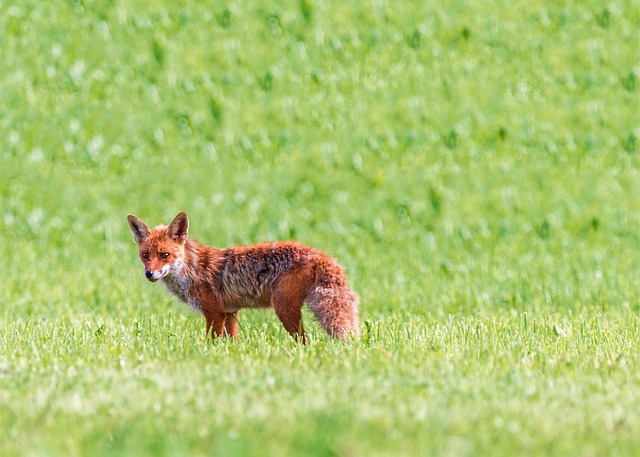
Best Practices for Wildlife Photographers and Enthusiasts
- Maintain a Safe Distance: Always stay at least 50 feet away from wild foxes. Use a telephoto camera lens (300mm or longer) or binoculars to get close-up views without intruding on their space.
- Never Approach Dens with Kits: During spring denning season, stay far back from known den openings. If parent foxes smell human scent nearby or feel monitored, they may abandon the den and move fragile kits to less secure secondary locations.
- Never Offer Food: Hand-feeding wild foxes instills dangerous dependencies, damages their digestive systems, and brings them too close to busy roads and residential hazards.
- Keep Dogs Leashed: When walking through woodlands, parks, or meadows, keep dogs on a lead. Off-leash dogs can surprise resting foxes or dig into active dens, triggering defensive bites.
- Contact Licensed Rehabilitators for Injuries: If you spot an injured, limping, or severely sick fox (such as one showing heavy fur loss from mange), do not attempt to capture it yourself. Contact a local wildlife rescue organization or animal control officer equipped with proper transport cages and medical support.
Related guides
- Forge World Kalkoplos: Avoiding Common Pitfalls
- Fuel Exe 9 8 Xt: Performance Benchmarks & Real-World Impact
- Escapism Games: Your Guide to Immersive Digital Worlds
Sources: Fox Entertainment
Frequently Asked Questions About Cute Foxes
Why are foxes considered cute?
Foxes are often perceived as cute due to their physical characteristics, such as large pointed ears, bushy tails, and expressive eyes, combined with their playful and curious behaviors, especially when young.
Can you keep a cute fox as a pet?
While some species like the Fennec fox are sometimes kept as exotic pets, and specific domesticated breeds exist, foxes are wild animals with complex needs and are not suitable for most households. Ownership is often illegal or heavily regulated.
Are cute foxes dangerous to humans?
Generally, foxes are shy and avoid humans. They are not inherently dangerous, and attacks are very rare, typically occurring only if they are sick, cornered, or protecting their young.
What do cute foxes eat in the wild?
Foxes are omnivores with a varied diet, typically including small rodents, birds, insects, fruits, berries, and carrion. Their diet adapts to what is available in their specific habitat.
What is the difference between a fox and a dog?
While both are canids, foxes are wild animals with distinct behaviors, hunting instincts, and social structures compared to domesticated dogs, which have been selectively bred for companionship over thousands of years.
Where can I see cute foxes safely?
You can observe foxes safely from a distance in their natural habitats, such as woodlands, fields, or even urban parks. Avoid approaching or feeding them to ensure both your safety and their well-being.