

To find the time 4 hours from now, add four hours directly to your current clock hour while keeping the exact same minutes. If adding four hours crosses 12:00, toggle between AM and PM, and if the calculation crosses midnight, the final time lands on the following calendar day.
This guide details step-by-step calculations for both 12-hour and 24-hour clocks. It also explains how midnight date rollovers, Daylight Saving Time transitions, and global time zones affect the calculated output, alongside digital tools and real-world uses like medication dosing.
What Time is 4 Hours From Now? Calculation Guide and Examples
To find the time 4 hours from now, add four hours directly to your current clock hour while keeping the exact same minutes. If adding four hours crosses 12:00 (noon or midnight), toggle between AM and PM, and if it crosses midnight, the final time lands on the following calendar day.
Whether you are setting a timer for medication, tracking a flight connection, scheduling an international conference call, or managing food preparation, adding four hours to your present moment requires matching your current clock display with simple arithmetic. While the basic calculation is straight addition, factors like 12-hour AM/PM cycles, 24-hour military notation, midnight date rollovers, and Daylight Saving Time shifts can introduce minor complications if overlooked.
How do you calculate 4 hours from now step by step?
Calculating the time four hours into the future depends on whether you are using a standard 12-hour clock (with AM and PM designations) or a 24-hour clock. Both systems use the exact same minute reading, so your current minute value never changes during a simple hour addition.
Calculating on a 12-hour AM/PM clock
- Look at your current clock and identify the current hour, minute, and AM or PM designation.
- Add 4 to the current hour number.
- If the resulting number is less than 12, keep the same AM or PM designation. For example, 2:15 AM plus 4 hours becomes 6:15 AM.
- If the resulting number equals 12, keep 12 as the hour and switch the designation from AM to PM (or PM to AM). For example, 8:00 AM plus 4 hours becomes 12:00 PM (noon).
- If the resulting number is greater than 12, subtract 12 from that sum and switch the designation from AM to PM (or PM to AM). For example, 10:30 AM plus 4 hours equals 14:30, which reduces to 2:30 PM.

Calculating on a 24-hour clock
On a 24-hour digital clock or military time display, calculations are even simpler because there are no AM or PM toggles. You simply add 4 to the current hour digit:
- If the current time is 07:45, adding 4 hours yields 11:45.
- If the current time is 14:20, adding 4 hours yields 18:20.
- If the sum of the hours reaches or exceeds 24, subtract 24 from the total to get the hour for the next day. For example, 22:15 plus 4 hours equals 26:15, which becomes 02:15 the following morning.
Quick reference conversion matrix
This table compares common starting times throughout the day with the exact calculated output 4 hours later, highlighting when AM/PM switches or calendar date rollovers occur.
| Current Start Time | 12-Hour Result | 24-Hour Result | Day Status Change |
|---|---|---|---|
| 1:00 AM | 5:00 AM | 05:00 | Same calendar day |
| 8:30 AM | 12:30 PM | 12:30 | Same calendar day (AM to PM) |
| 11:15 AM | 3:15 PM | 15:15 | Same calendar day (AM to PM) |
| 2:00 PM | 6:00 PM | 18:00 | Same calendar day |
| 8:00 PM | 12:00 AM (Midnight) | 00:00 | Advances to next calendar day |
| 9:45 PM | 1:45 AM | 01:45 | Advances to next calendar day |
| 11:00 PM | 3:00 AM | 03:00 | Advances to next calendar day |
What happens when adding 4 hours crosses midnight?
The most frequent error in routine time math happens during evening hours when adding four hours moves the final output past 12:00 AM (midnight). Crossing midnight changes not only the time display but also advances the calendar date by one full day.
When your starting time falls between 8:00 PM and 11:59 PM, adding four hours will always land in the early morning hours of the following day. For example, if you are scheduling a process at 9:15 PM on a Tuesday evening, four hours from now will be 1:15 AM on Wednesday morning.
Recognizing day rollovers is vital for several real-world tasks:
- Setting digital reminders: If you set a task reminder for 1:30 AM without updating the date field, your phone or calendar app may schedule it for 1:30 AM on the current day (which has already passed) rather than tomorrow morning.
- Overnight shift work: Employees starting a 4-hour shift block at 10:00 PM must log their end time as 2:00 AM on the subsequent date.
- Travel check-ins: Hotel bookings, flight departures, and car rental pickups scheduled around midnight require strict alignment between the clock time and the calendar date.
How do Daylight Saving Time transitions affect a 4-hour window?
Standard mental arithmetic assumes that hours flow continuously in fixed 60-minute increments. However, twice a year in regions that observe Daylight Saving Time (DST), official clock time jumps forward or falls back by one hour, disrupting simple calculations if your 4-hour window spans the transition hour.
According to the National Conference of State Legislatures (NCSL) in 2026, discussions around state and national time zone standards continue, but DST shifts remain active in many countries and US states.
The “Spring Forward” transition (clocks jump ahead)
In spring, clocks advance directly from 1:59:59 AM to 3:00:00 AM, skipping the 2:00 AM hour entirely. If you begin a 4-hour countdown at 1:00 AM on the night of a spring DST transition:
- One physical hour elapses when clocks jump to 3:00 AM.
- Three remaining physical hours bring the clock to 6:00 AM.
- On the clock face, 4 hours after 1:00 AM appears as 6:00 AM instead of the expected 5:00 AM, because one clock hour was skipped.
The “Fall Back” transition (clocks repeat an hour)
In autumn, clocks fall back from 1:59:59 AM to 1:00:00 AM, repeating the hour between 1:00 AM and 2:00 AM. If you begin a 4-hour calculation at 12:30 AM on the night of an autumn transition:
- The clock progresses to 1:59 AM, rolls back to 1:00 AM, and advances again.
- Four actual physical hours of elapsed time will end when the clock reads 3:30 AM rather than 4:30 AM, because the same hour occurred twice on the clock display.
When scheduling critical activities across these transition nights, consult dedicated digital tools that account for automatic regional clock adjustments, or reference official rules on Daylight Saving Time shifts.
How do time zones change what 4 hours from now means globally?
The phrase “4 hours from now” defines an exact, absolute moment in future physical time. However, how that moment appears on a clock display depends entirely on the geographical time zone of the person reading it.
If you are located in New York under Eastern Standard Time (EST, which is UTC-5) and your current time is 10:00 AM, then 4 hours from now in your local area will be 2:00 PM EST. For a colleague located in London operating on Greenwich Mean Time (GMT, UTC+0), their current clock reads 3:00 PM. Four hours from now for them will be 7:00 PM GMT.
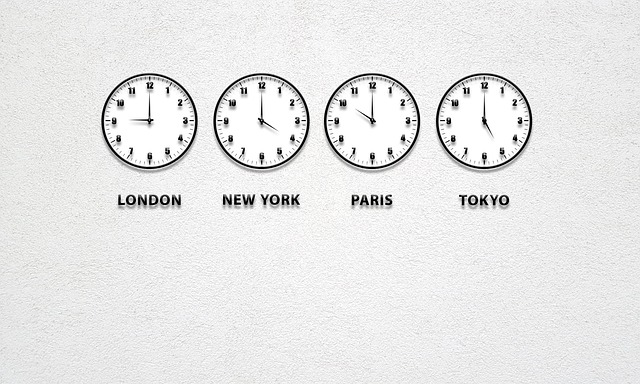
Both people are pointing to the exact same instant in absolute time, but their clock numbers differ based on geographical offset. When coordinating international business meetings, broadcasts, or remote collaborations, always specify the target time zone alongside the numeric time to avoid regional confusion.
For example, a distributed team spread across San Francisco (Pacific Time), Austin (Central Time), and New Delhi (Indian Standard Time) must align their future deadlines against a standardized reference point like Coordinated Universal Time (UTC) or state both local start and end times clearly.
Which online calculators and digital tools give exact results?
For instant verification without mental math, modern digital tools can calculate target times while automatically adjusting for localized time zones, regional DST variations, and midnight date rollovers.
Dedicated web calculators
Websites offering dedicated hour-addition utilities—such as online time calculators, Time Calculator, and Inch Calculator—allow you to input a starting hour and minute along with a offset duration (such as 4 hours). These tools instantly render the computed end time, date, and time zone summary.
Voice assistants and search queries
Modern mobile operating systems and smart devices feature built-in voice assistants that instantly compute relative time requests:
- Asking a smartphone “What time will it be 4 hours from now?” immediately calculates the response using your device’s internal clock and active GPS position.
- Typing “4 hours from now” directly into standard search bars returns a direct, dynamic snippet showing the computed time and day.
Calendar and scheduling platforms
When managing events across different regions, software like Google Calendar and Microsoft Outlook allows you to schedule tasks using relative durations. Setting an event duration to 4 hours from your active local time automatically formats invitation cards for recipients in their respective native time zones.
When is knowing 4 hours from now essential in daily life?
Understanding relative time calculation is a fundamental skill with practical applications across everyday health, work, and personal routines.
1. Medical dosing and prescription schedules
Many over-the-counter pain relievers, fever reducers, and prescription medications specify dosing intervals such as “take every 4 hours as needed.” If you take a dose at 11:15 AM, calculating 4 hours ahead determines that your next eligible dose time is 3:15 PM. Maintaining precise records prevents accidental under-dosing or unsafe early re-dosing.
2. Baking and culinary timing
In artisan bread making, sourdough fermentation, slow cooking, and sous-vide culinary methods, recipe instructions frequently call for proofing or cooking times of 4 hours. If dough is mixed and placed in a proofing box at 7:30 AM, knowing that 4 hours from now is 11:30 AM allows bakers to align multi-step preparation schedules accurately.
3. Flight layovers and transit connections
Travelers navigating airline itineraries often evaluate layover windows. If a flight arrives at an intermediate hub at 2:40 PM and the connecting flight departs 4 hours later, calculating 6:40 PM gives travelers a clear benchmark to plan meals, security re-screening, and gate navigation.
4. Shift work compliance and rest intervals
Labor guidelines and workplace safety rules in many commercial industries mandate regulated breaks or maximum continuous duty blocks, such as mandatory breaks after 4 hours of continuous driving or heavy equipment operation. Tracking 4-hour operational blocks ensures regulatory compliance and worker safety.
5. Media broadcasting and live event management
Stage managers, live video producers, and broadcast directors operate under strict timing frameworks. If a live sporting event or theatrical production begins at 7:00 PM with a planned 4-hour broadcast window, production teams line up programming to wrap precisely at 11:00 PM.
What are the most common mistakes in calculating 4 hours ahead?
Even though adding four hours seems simple, several recurrent errors disrupt manual calculations:
- Ignoring the AM/PM boundary: Forgetting to flip the designation when crossing 12:00. Adding 4 hours to 10:00 AM yields 2:00 PM, not 2:00 AM.
- Miscalculating 12:00 AM vs 12:00 PM: Confusing noon and midnight. Adding 4 hours to 8:00 AM results in 12:00 PM (noon), whereas adding 4 hours to 8:00 PM results in 12:00 AM (midnight of the next calendar day).
- Overlooking non-zero minutes: Forgetting to carry minute values forward. If the starting time is 4:42 PM, adding 4 hours gives 8:42 PM, not 8:00 PM or 9:00 PM.
- Failing to advance the calendar date: Calculating a late-night time correctly as 1:00 AM but forgetting that the calendar day has moved to tomorrow.
- Assuming global uniform time zones: Forgetting that distant regions operate on different base offsets or do not observe DST, leading to misaligned meeting schedules across different regions. Always double-check local clock time when coordinating across state lines or international borders.
Frequently asked questions
What is the fastest way to calculate 4 hours from now mentally?
Add 4 directly to your current hour number and keep the current minute reading exactly as it is. If your sum reaches or exceeds 12, switch your AM or PM designation, and subtract 12 from any sum higher than 12.
Does “4 hours from now” mean the same time everywhere in the world?
It represents the exact same future moment in physical time, but local clock readings will differ based on geographical time zones. For example, 4 hours from now in New York will show a different clock hour than 4 hours from now in Tokyo.
What happens to a 4-hour calculation if Daylight Saving Time changes overnight?
If clocks jump forward one hour during your 4-hour period, the final clock time will read one hour higher than standard addition suggests. If clocks fall back one hour, the final clock time will read one hour lower.
How do I calculate 4 hours from now on a 24-hour military clock?
Add 4 directly to the hour digits. If the total is 24 or greater, subtract 24 to get the hour for the next day, while keeping the minute digits unchanged.
Why did my phone set a reminder for the wrong time when adding 4 hours late at night?
If you set an alarm or reminder for an early morning hour (like 1:30 AM) without advancing the calendar date, digital devices may default to the early morning hours of the current day, which has already passed.